
Dedicated to Willy Larson
Copyright 2023 Christian M. Newman
I. Fantasia on La – Tsidiiyazhi abini (ancient mousebird) (2021-23): 12:23
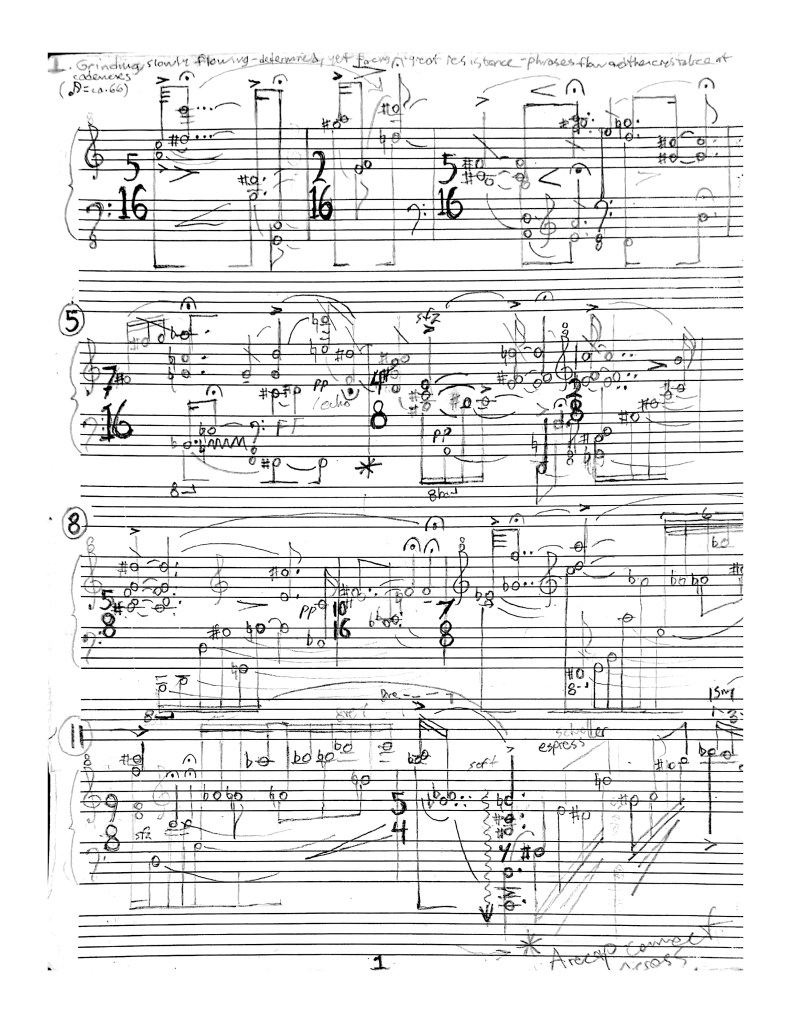
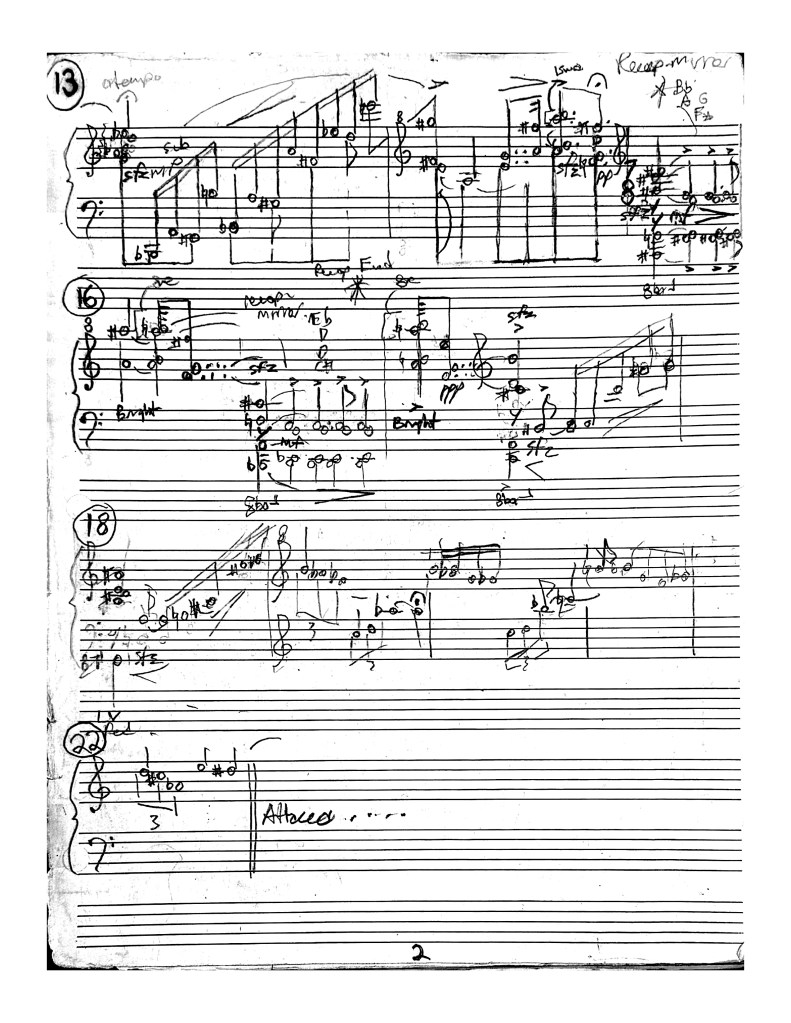
A Section, Grinding, slowly flowing- pp. 1-2, mm. 1-22: 00:00- 04:30
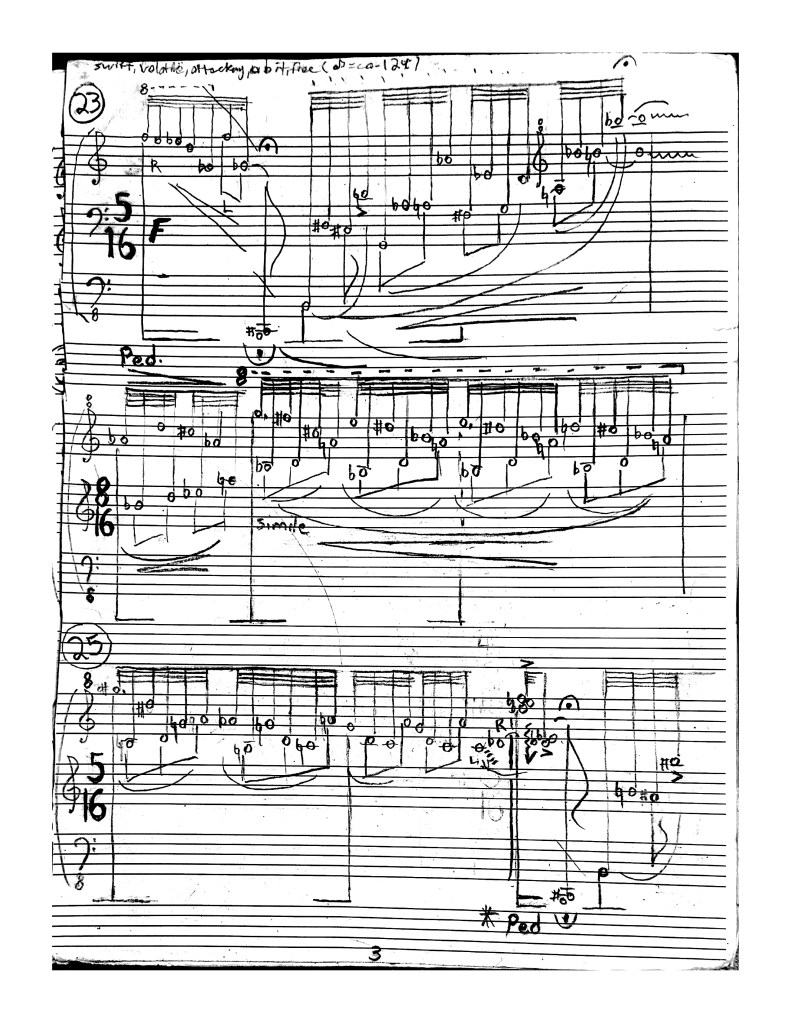
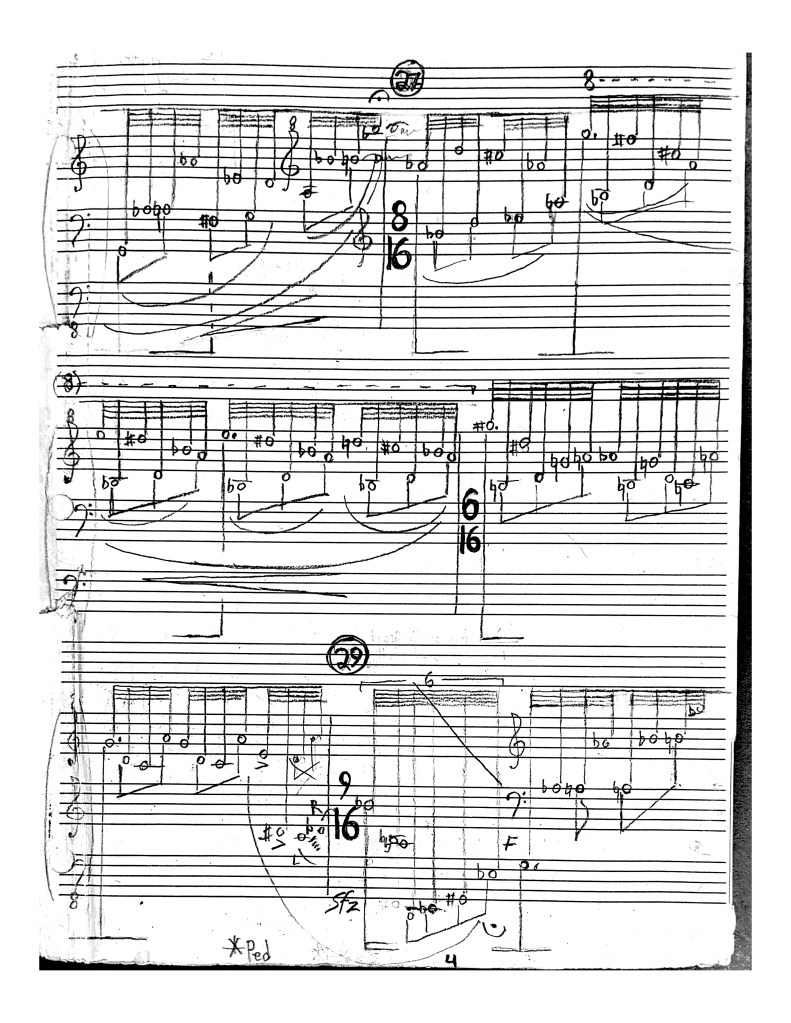
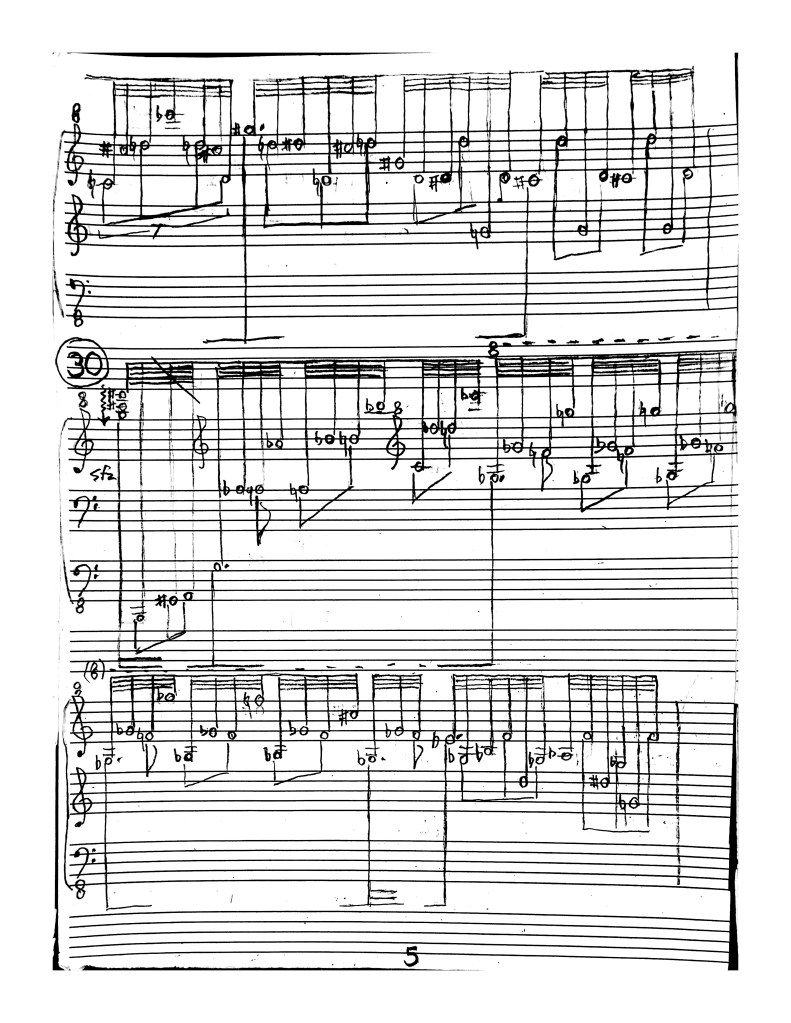
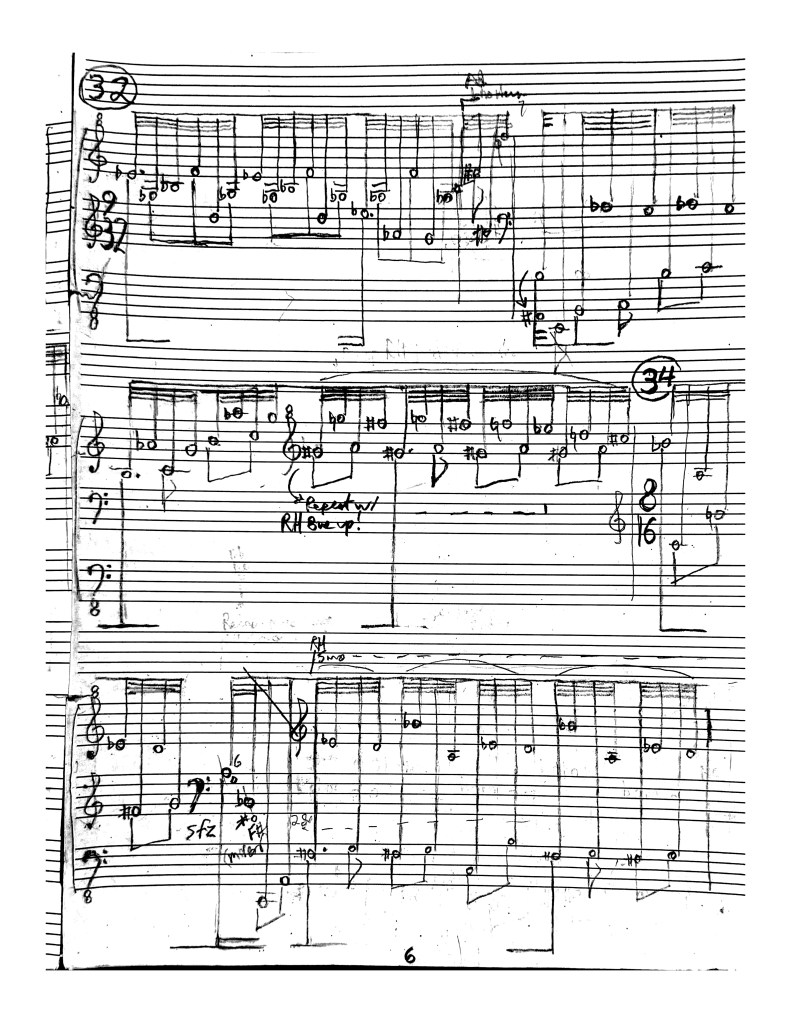
B Section, Swift, volatile, attacking- pp. 3-7, mm. 23-36: 04:30 – 05:42
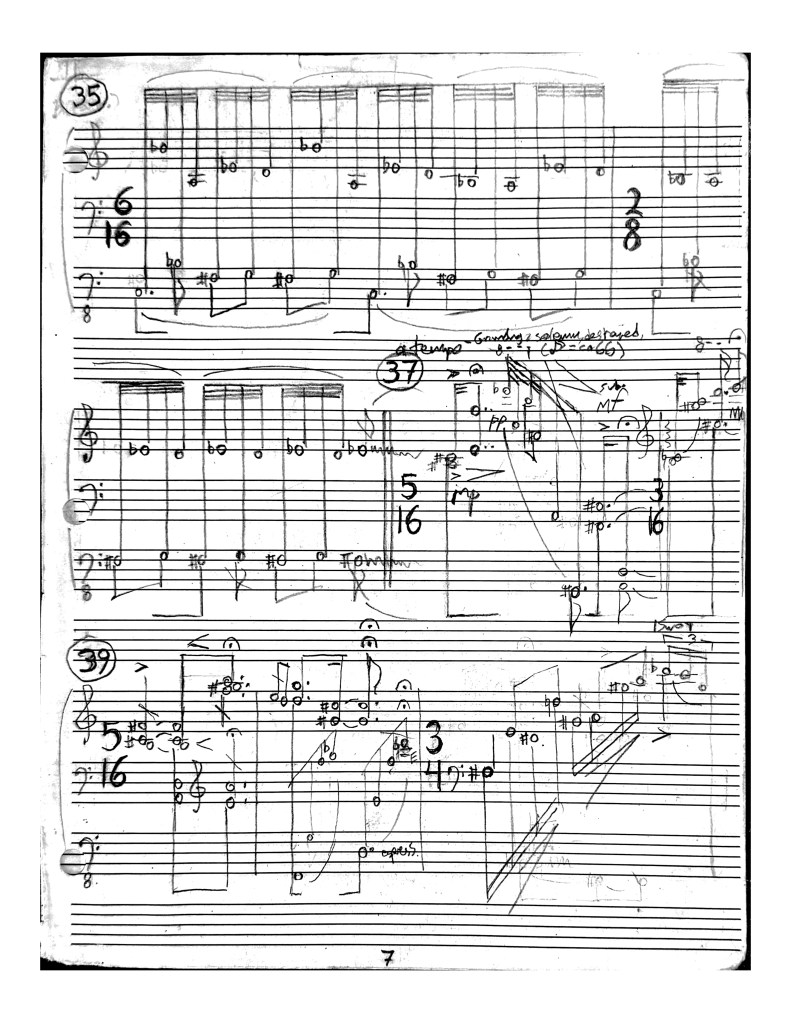
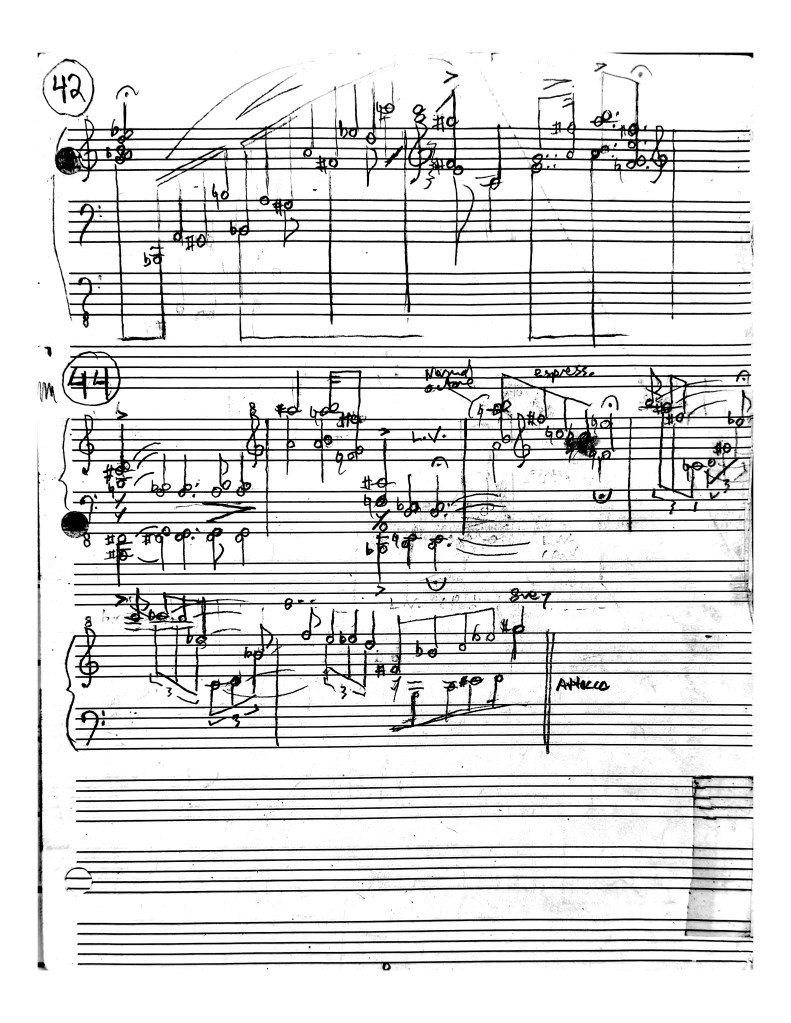
A’ Section, a tempo: grinding, solemn, destroyed- pp. 7-8, mm. 37-49: 05:42 – 08:38
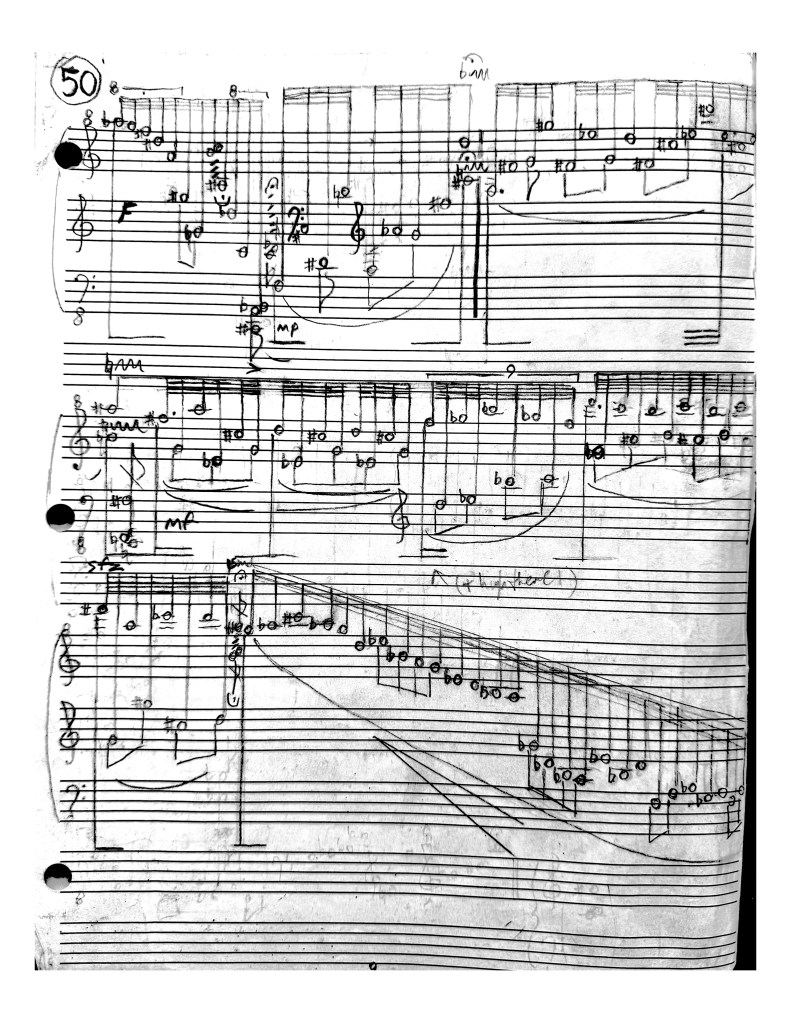
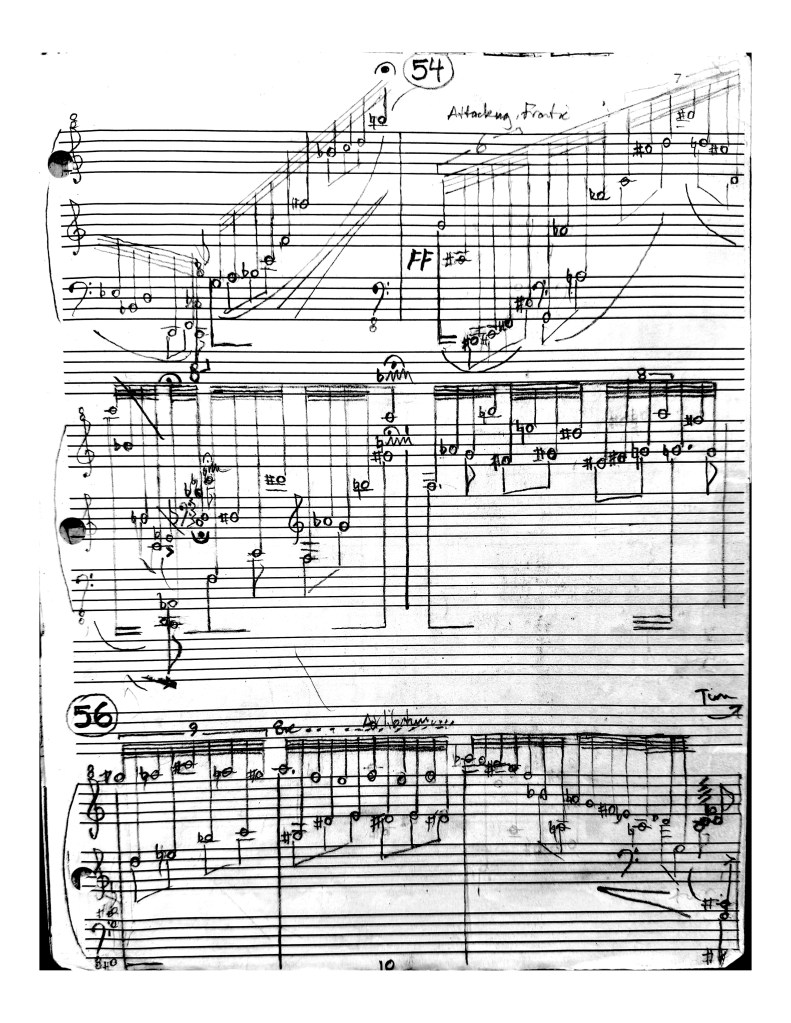
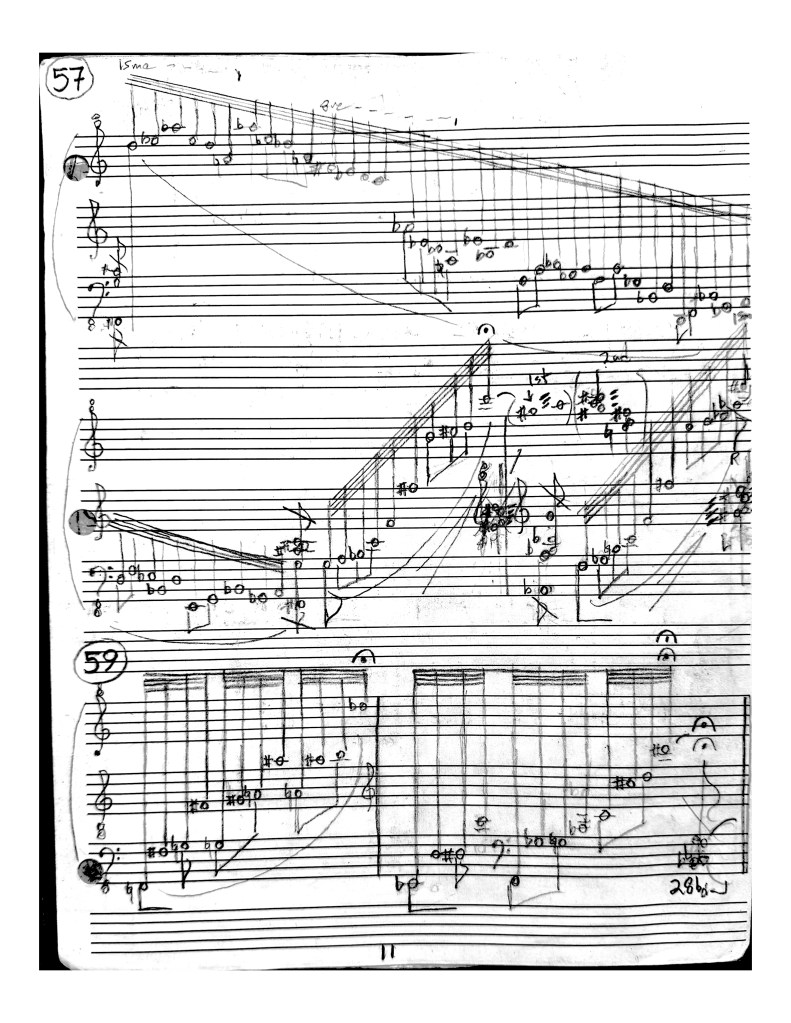
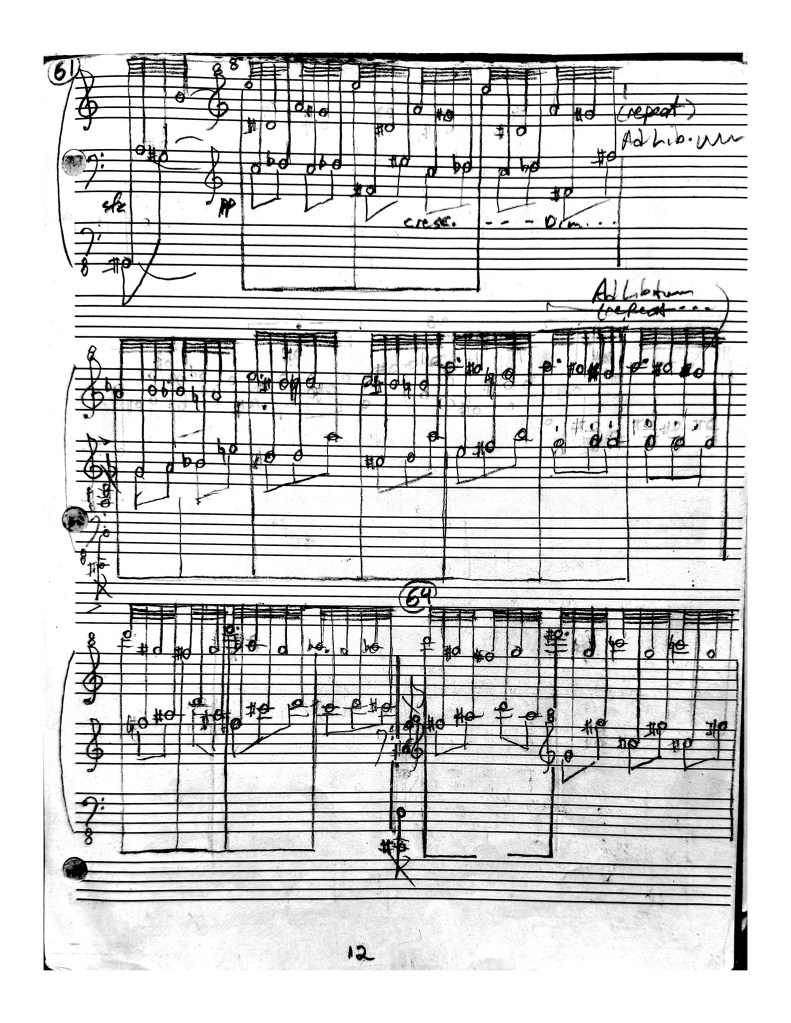
B’ Section, Swift, attacking, frantic- pp. 9-15, mm. 50-77: 08:39 – 12:16
Complete Piece:
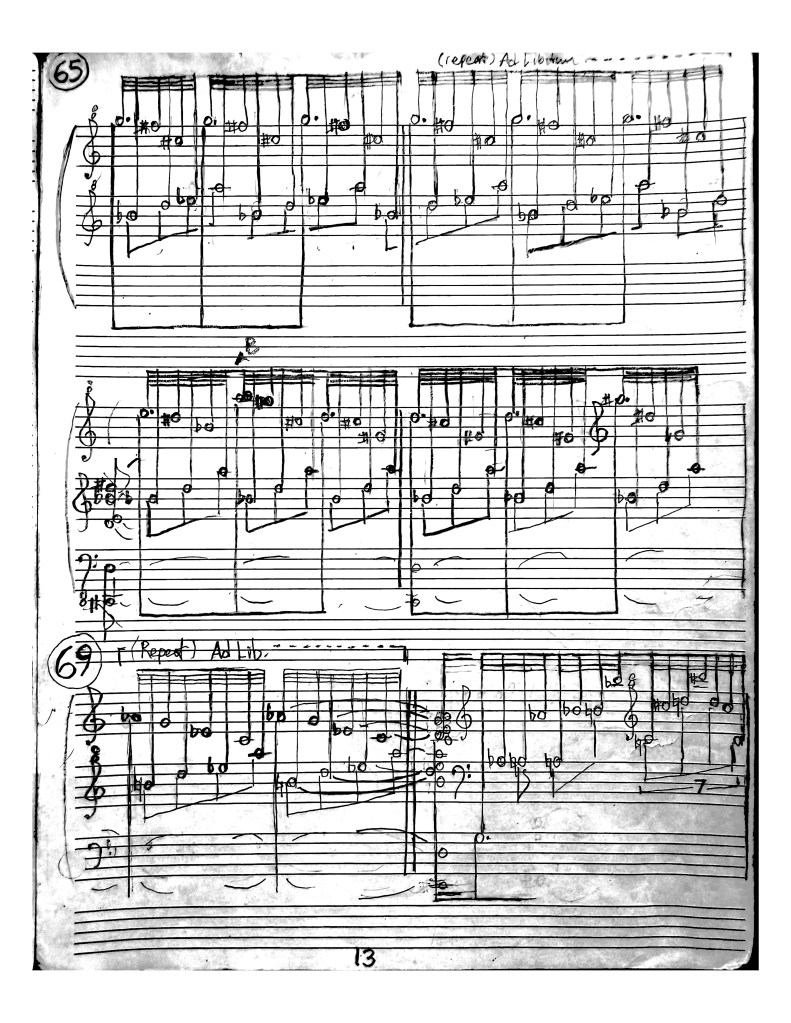
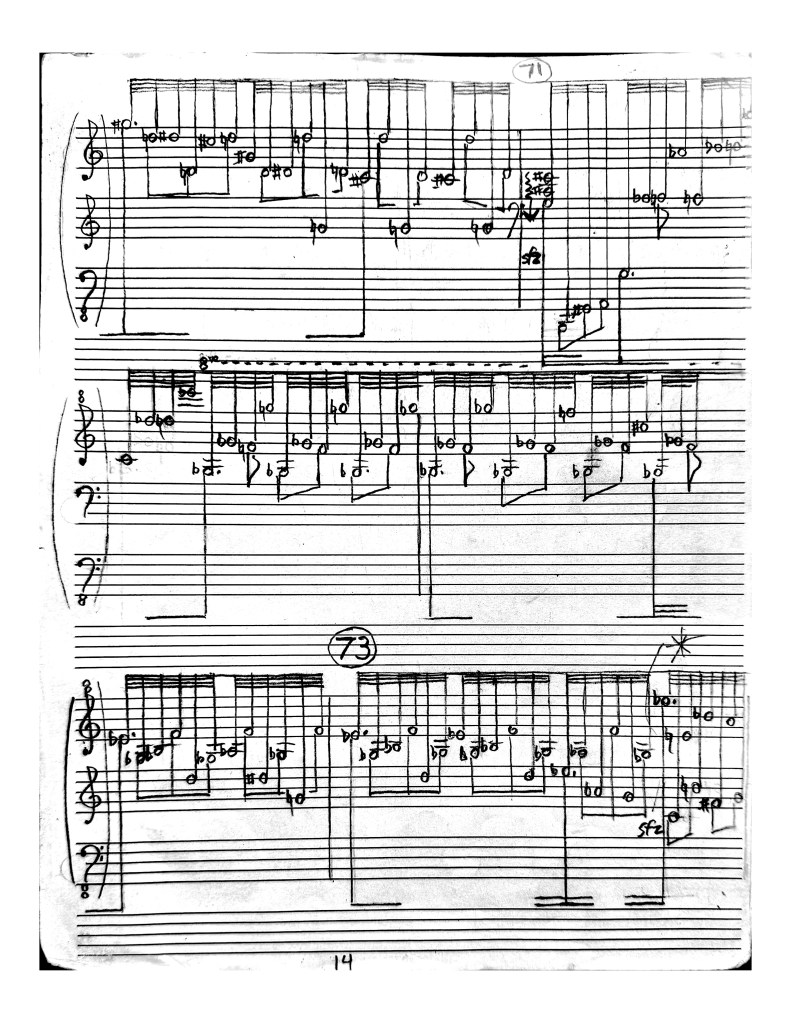
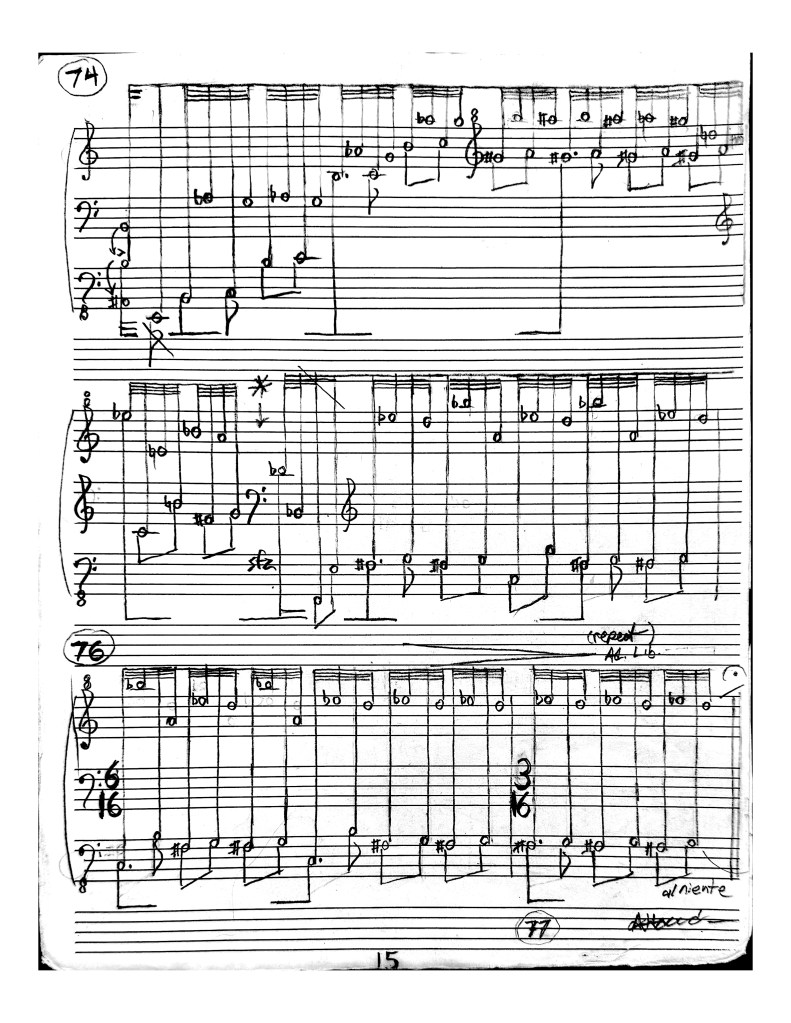
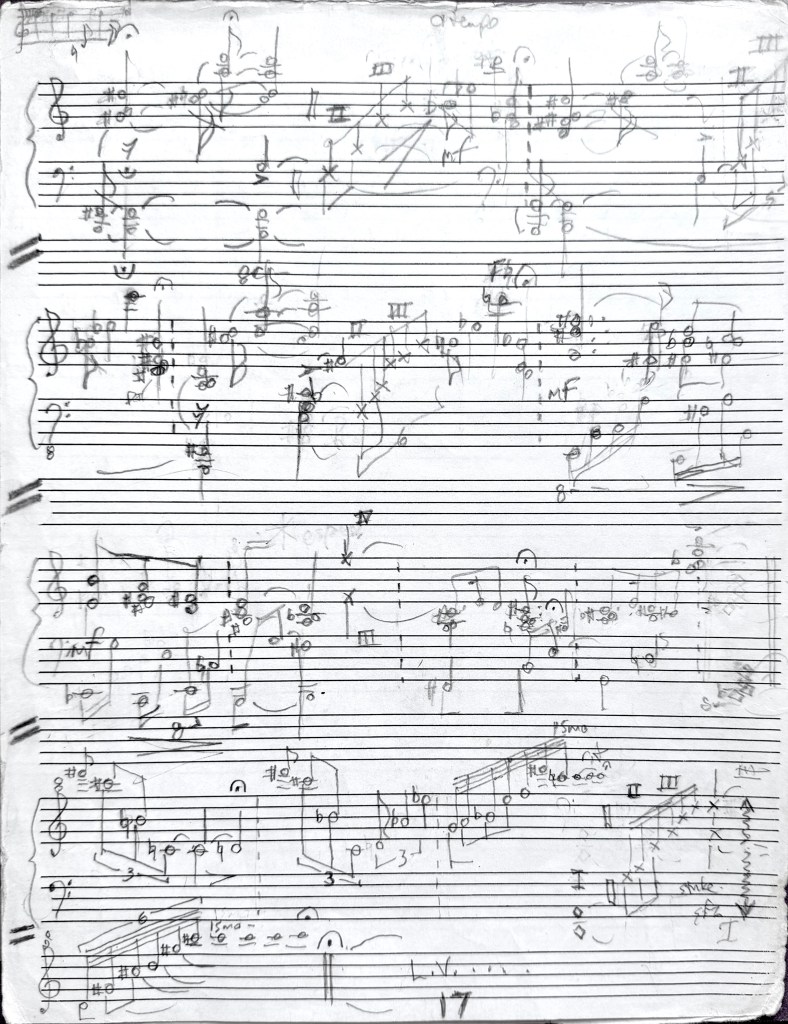
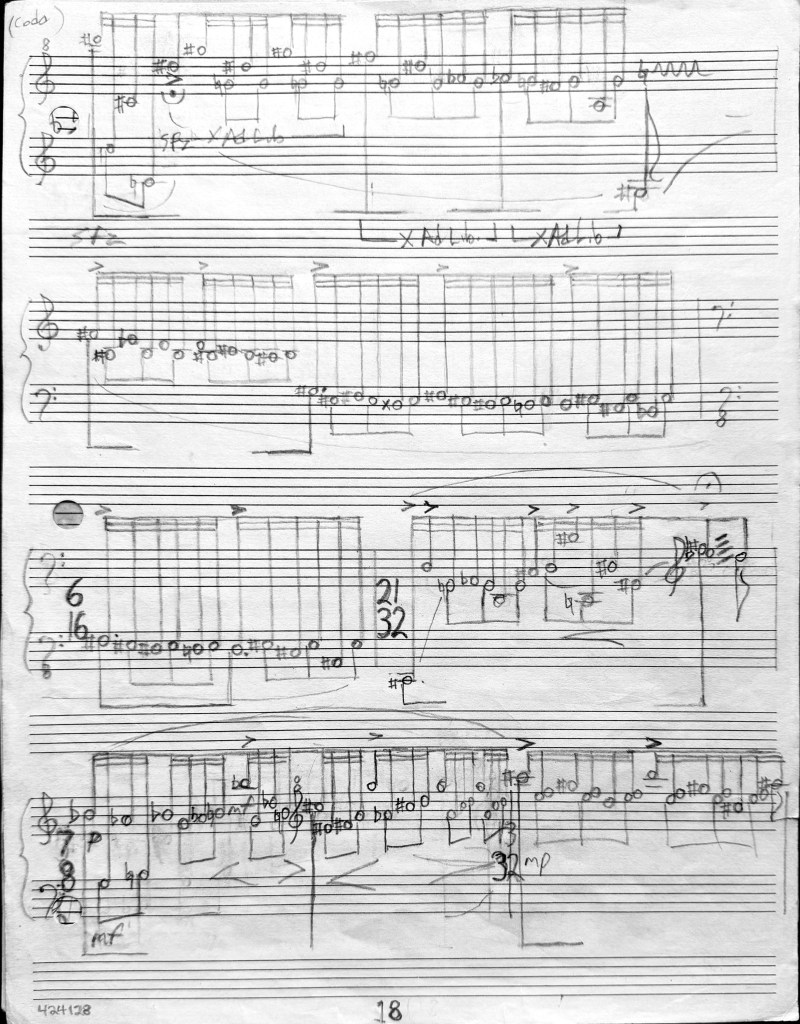
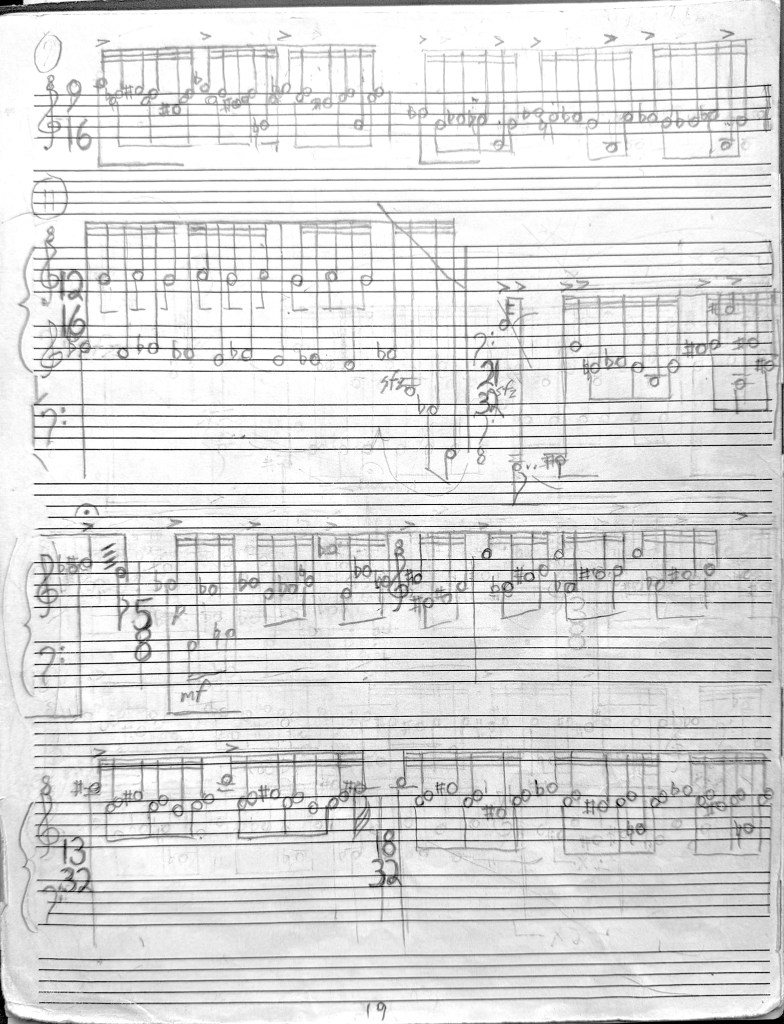
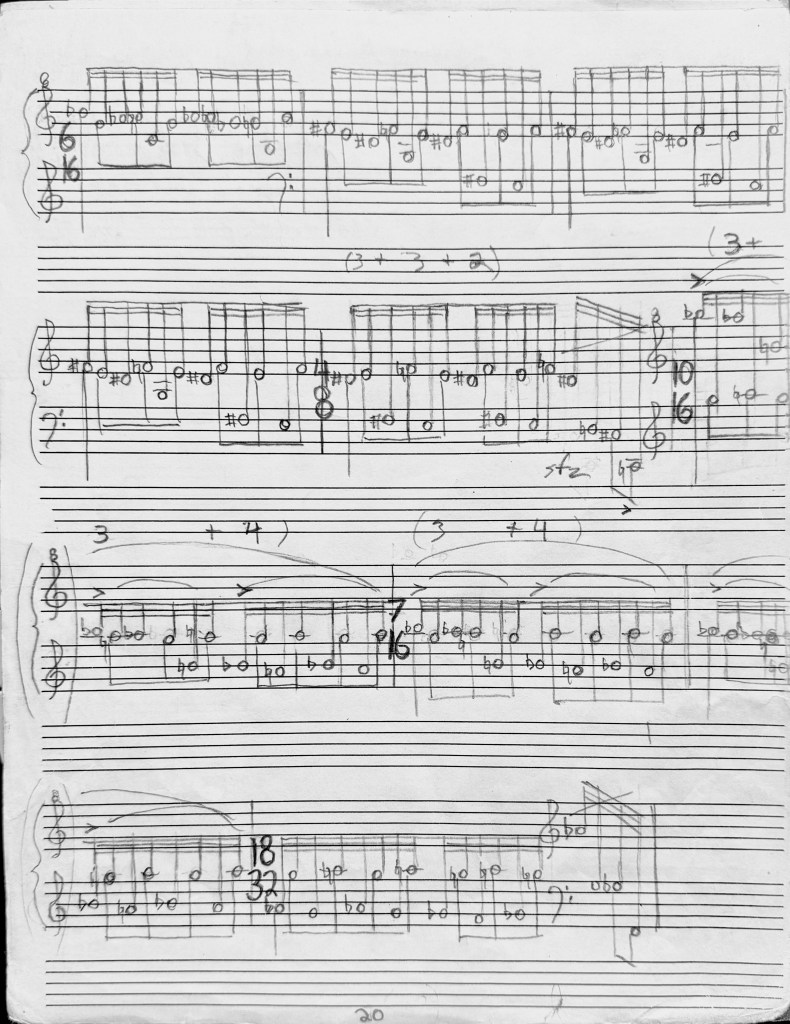
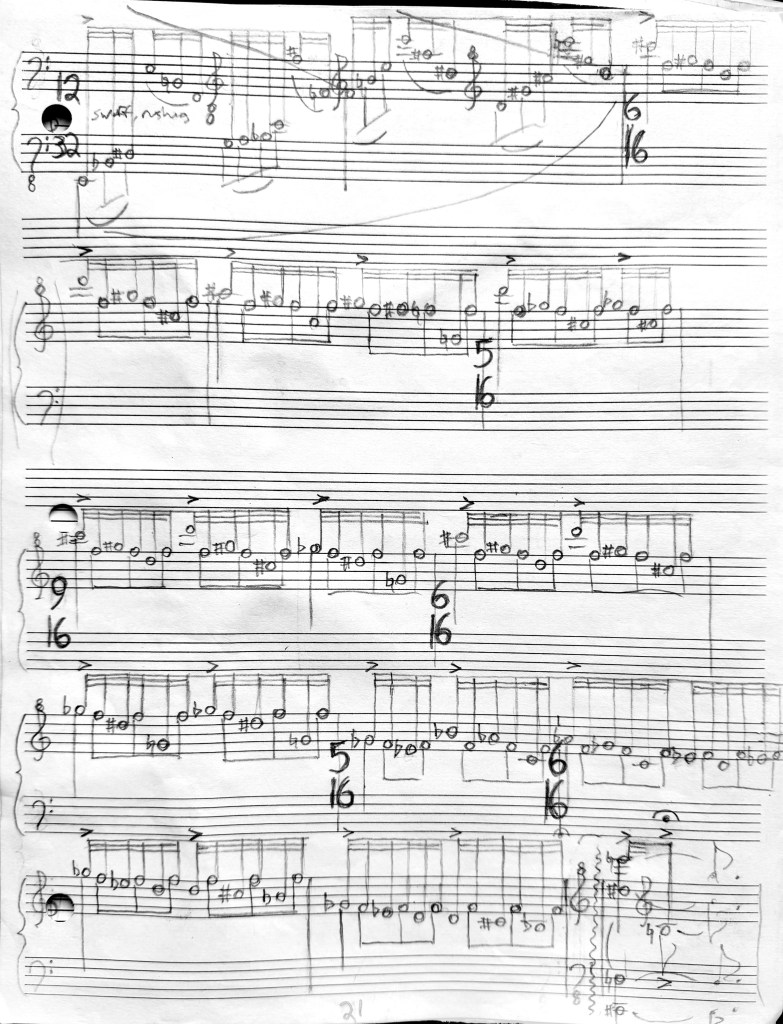
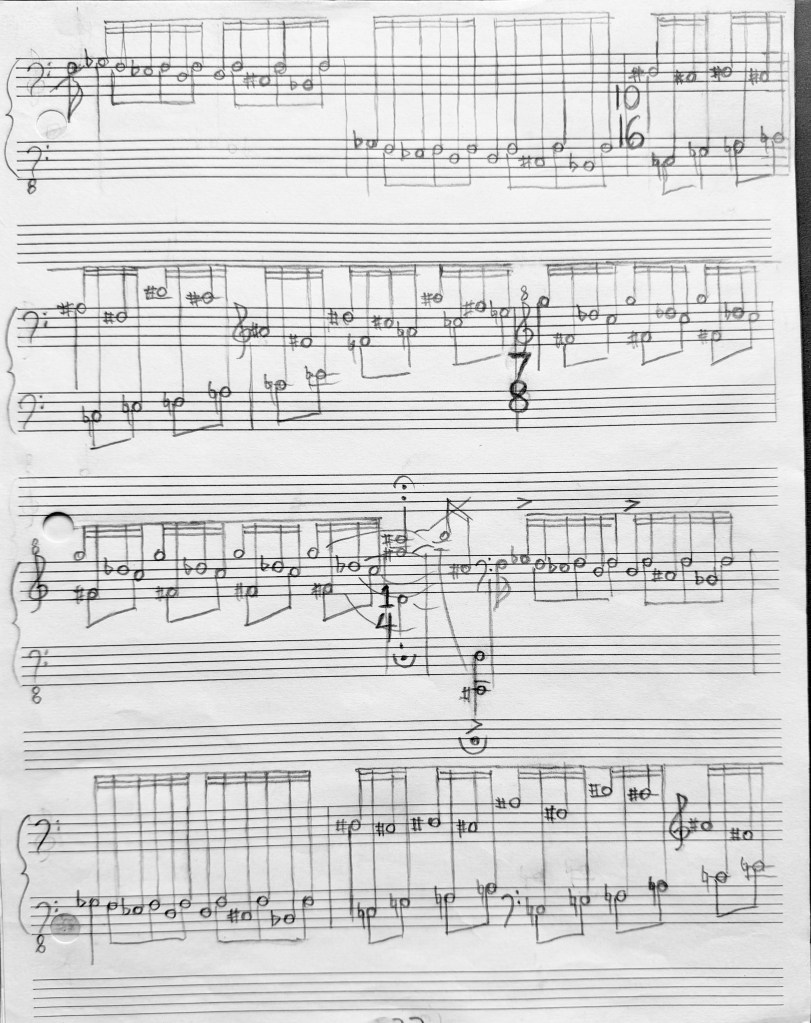
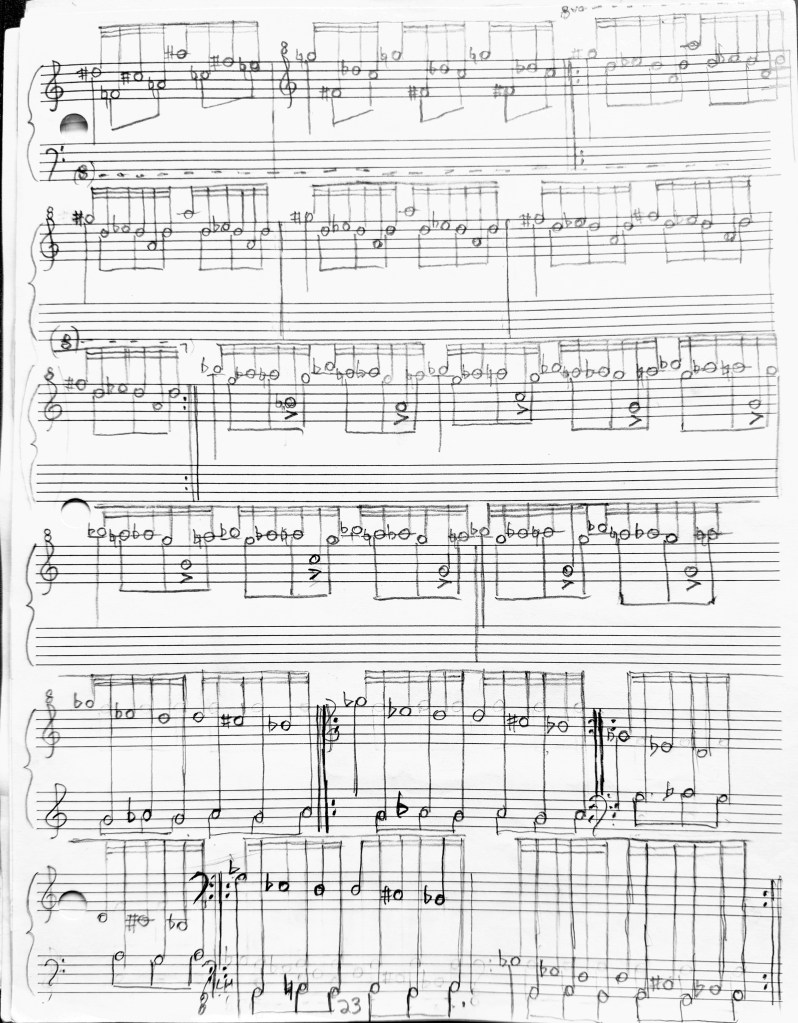
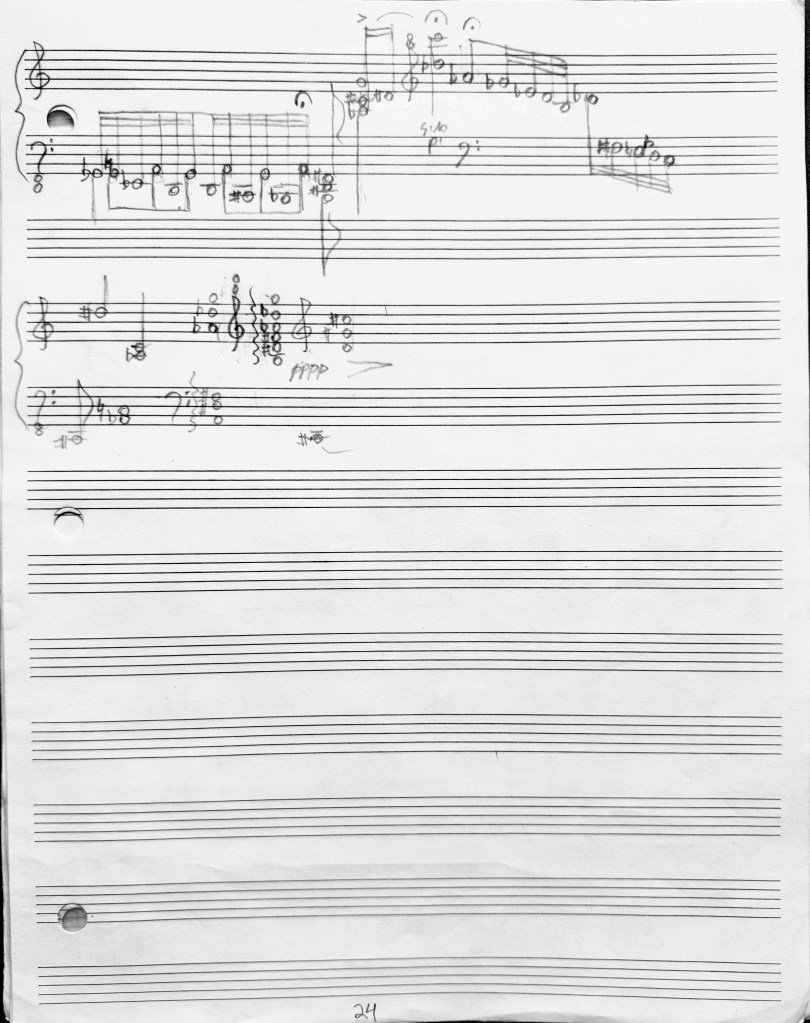
Handwritten Score:
A Section, Grinding, slowly flowing
B Section, Swift, volatile, attacking
A’ Section, a tempo: grinding, solemn, destroyed
B’ Section, Swift, attacking, frantic
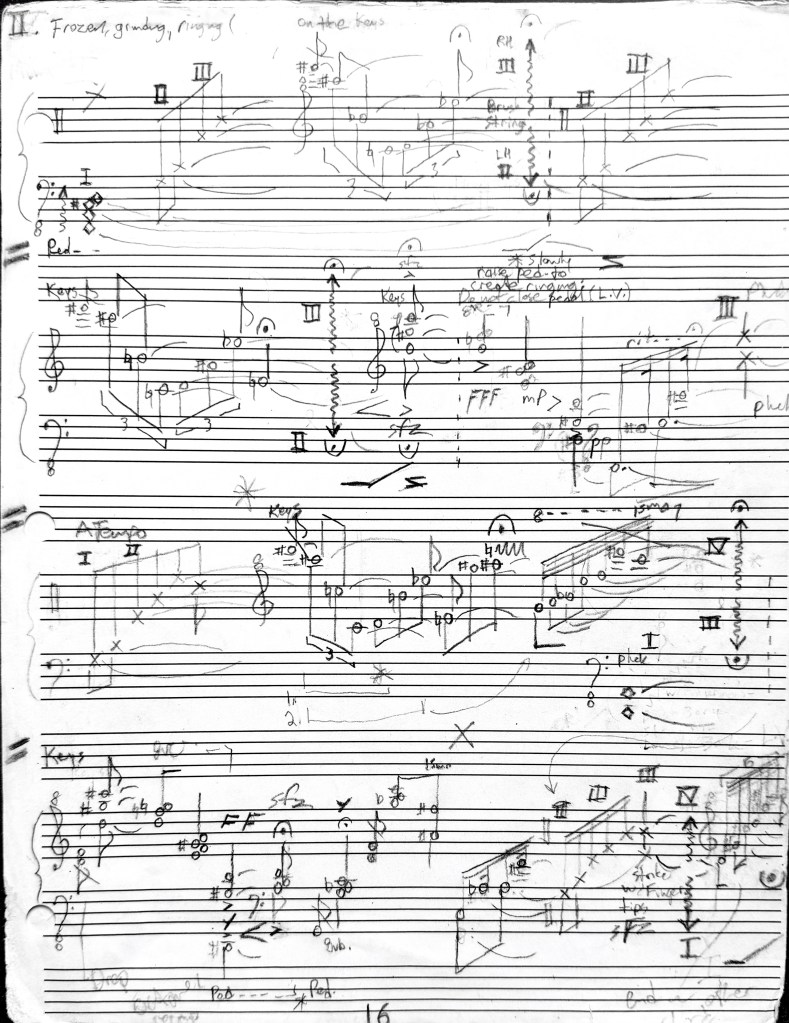
II. Fantasia on Fa – Archaeopteryx lithographica (toothed, feathered dinosaur/ ancient bird) (2023): 06:52
III. Fantasia on Re – Diatryma (Gastornis gigantea, or “Terror Bird”) (2023-25): 03:01
Program Notes:
I. Fantasia on La – Tsidiiyazhi abini (ancient mousebird) (2021-23)
“Three Fantasies” is a collection inspired by childhood impressions of fossilized bird remains at the the New Mexico Museum of Natural History. As a very young boy of four or five, I feared that these animals had been pressed into the stones by some great force or process. This deeply terrified me as I feared the same fate; and I also felt a terrible sadness for these creatures, whom I pictured had been pressed alive, screaming in terror as the rocks slowly warped and morphed around them.
The first piece alternates this impression of a creature locked in permanent stillness with impressions of the living animal, the delicate, tiny mousebird, essentially a modern sparrow, dwelling in a terrifying world of monsters. Composed as a sort of modified “French Overture”, the work begins with a still, and solemn A section of considerable length before an explosive and virtuosic B section takes hold, driving to a hard, rapid, polyrhythmic cadence. The recapitulation of A’ is severely truncated, while conversely, the B’ expands into a broad, variation and development of the B section concepts, including near-traditional climaxes descending into rapid passage work, and blistering arpeggio runs. The work is uniquely designed for a percussive style of playing, utilizing rapid, back-and-forth attacks; large accented leaps, and a broad use of registers, broken into individual harmonic paradigms.
——————————————–
II. Fantasia on Fa – Archaeopteryx lithographica (toothed, feathered dinosaur/ancient bird) (2023)
“Archaeopteryx” is a work composed in two parts, with a first section utilizing extensive forms of extended piano techniques in combination with complementary chordal-motion and melodic fragments on the keys. These sounds utilize an extensive array of specified, and nonspecific string plucks, fingertip brushes, harmonics, finger striking, and other aspects of pedal control and ringing to depict the strange behavior of the gliding dinosaur as it stalked small prey while running over massive tree trunks of the misty, dimly-lit forest. A heavy tone of paranoia overlays this section, and specific brushing and swooshing sounds ‘mimic’ the actions of the wing flapping and gliding of archaeopteryx.
A second major section is built on a descending, low register chord progression, symbolizing the eons of slow descent into fossilization. A tragic, quasi-tonal harmonic paradigm guides this section, leading to an somber and ominous recapitulation.
——————————————–
III. Fantasia on Re – Diatryma (Gastornis gigantea, or “Terror Bird”) (2023-2025)
“Diatryma” was a brutal, massive bird creature, taller than a person, who stalked the grass plains preying upon large, prehistoric mammals. A terrifying, single massive claw would be used to slash and tear the prey as the bird leapt from the shadows, before smashing apart the victims bones with a massive, human-head-sized, razor-sharp bill. This work depicts the living actions of the creature for nearly the entire duration, frantically leaping through call-and-response, blistering cascades of stabbing notes between the hands and low, jabbing accented, thorny clusters.
Like the allegro sections in the first work from the set, this piece utilizes extensive percussive-style playing, with numerous large leaps both depicting the leaping attack of the Diatryma, and recalling the opening motives. This piece, also like the first, sets up a juxtaposition and even a sort of struggle between high and low registers, each launching attacks, and receiving responses from the other. Ultimately, the lower registers (the stones) force the upper (the living animal) into rhythmical alignment and cardinal ordering in a series of ascending lines for the concluding chord, which seams together the disparate harmonies amongst the registers.
——————————————–
Copyright 2023 Christian M. Newman
All rights reserved

