
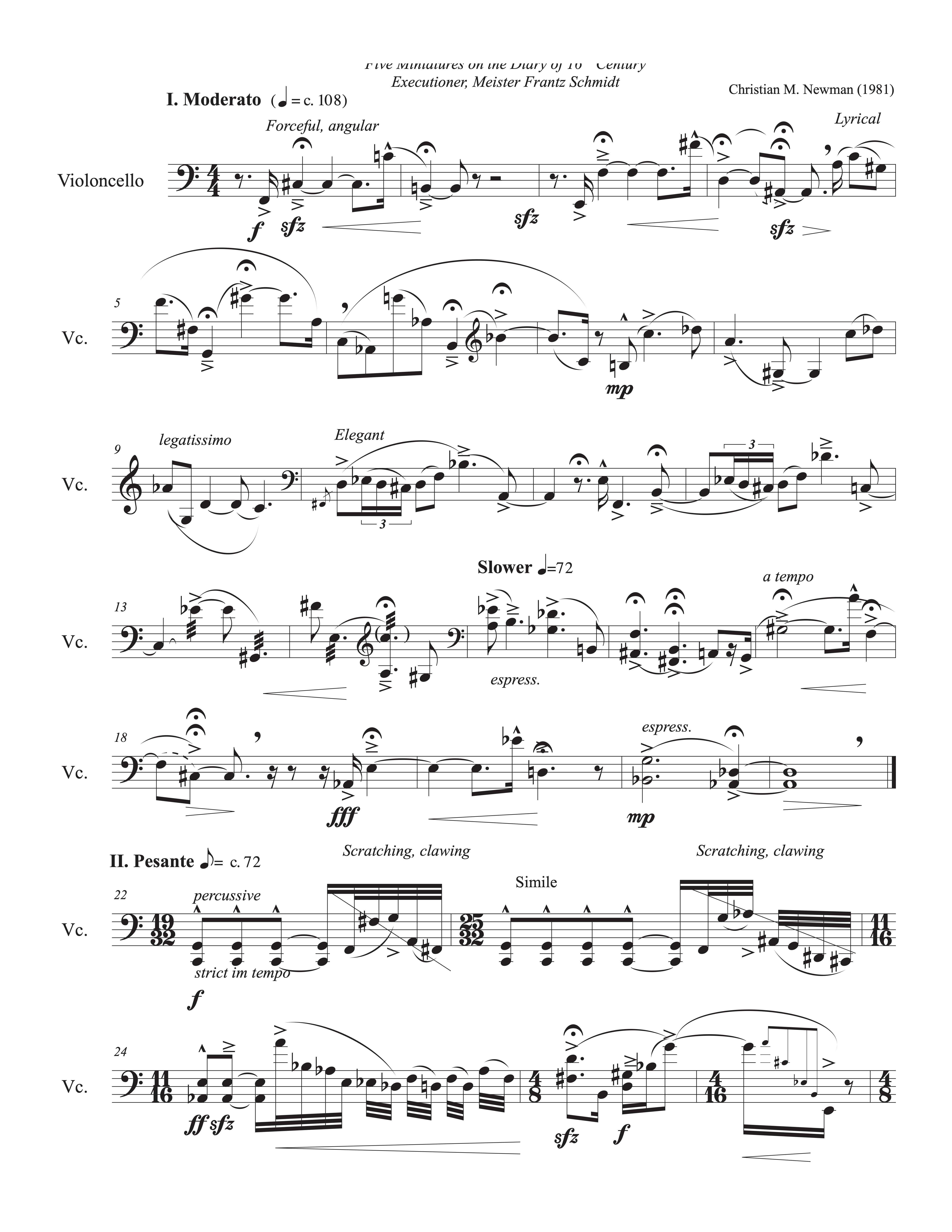
Five Miniatures on the Diary of 16th Century Executioner, Meister Frantz Schmidt
Notes for Performers and Listeners
Someone is speaking of shocking deeds nearby, dark and twisted acts from a long past world. They are whispering, murmuring, concealing their own entanglement, justifying a harsh reality. And they speak in practical and emotionless terms about these events and give evidence they believe in the spiritual and human validity of these ways. What they describe is somehow familiar, ancient, clear, and darkly human.
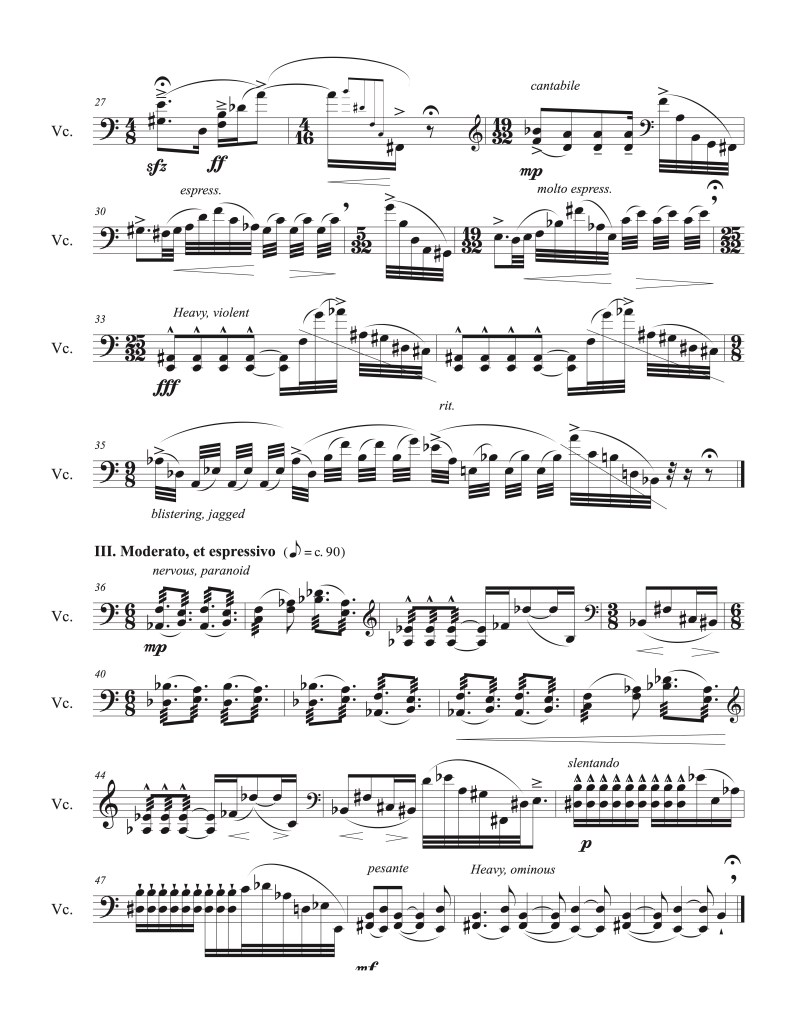
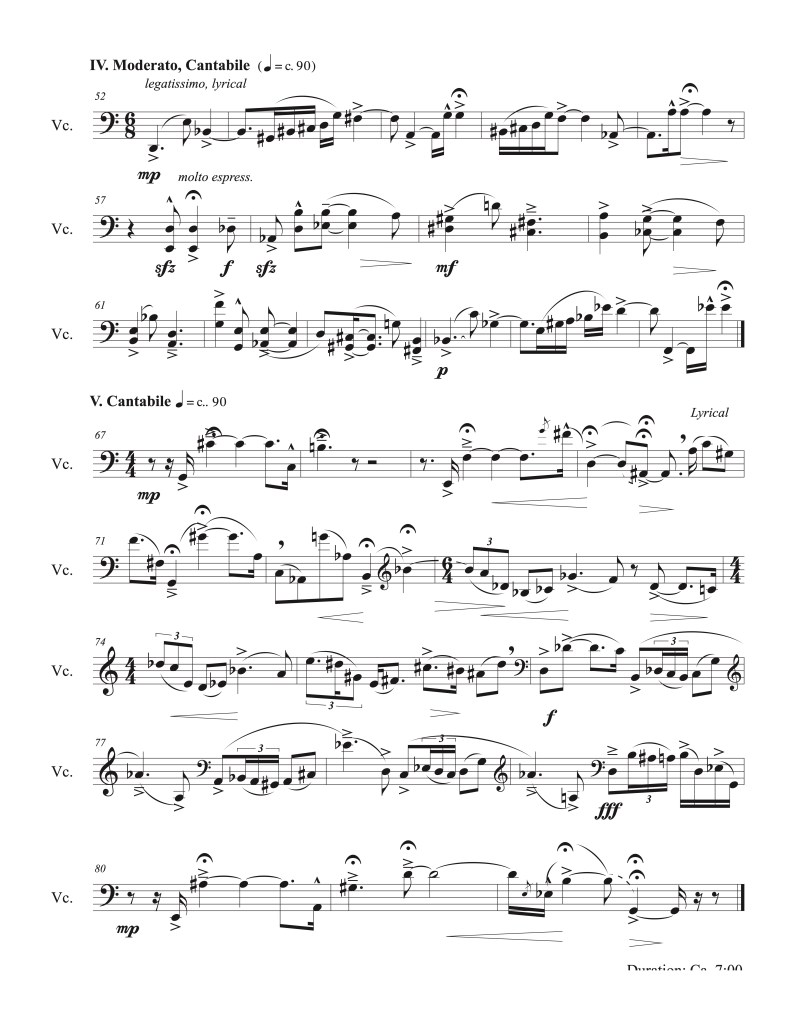
The diary of a 16th-Century Nuremberg’s execution, Meister Frantz Schmidt, details all 394 executions Schmidt performed during his career. He carefully lists facts of the crime, and manner of death and torture in plain, muted language, held fast by a belief that he was dispensing justice for the victims of these crimes, and helping to maintain the rule of law in a society rampant with crime and corruption. These works for solo cello are inspired by this same muted emotional affect, wherein one bears witness to something shocking and perverse, yet gives a formal, and controlled response. These pieces are meant as something of that muted manner, as if conveying a shocking series of facts in the plain, direct, and gentle tones.
The performer can feel free to play these pieces with a sense for a hidden, and secretive tone, as if disguising the emotion and the ‘ghastliness’ at the core of the musical genetics. One may regard the dynamics- for example, thefortissimo at m.10- as an instruction to take a harsh tone color, or rough bowing sound, with an increase in dynamic, as much as is possible. These pieces should be played at a naturally gentle pacing with 15 to 30 seconds of silence between each work.
 Christian M. Newman