
Pour piano seul
(Momentary Impressions of Polyommatinae (Arctic Blue Butterflies (Agriades glandon) in Albuquerque) (2019- 2024)
For Solo Piano
Handwritten score and performance recordings,
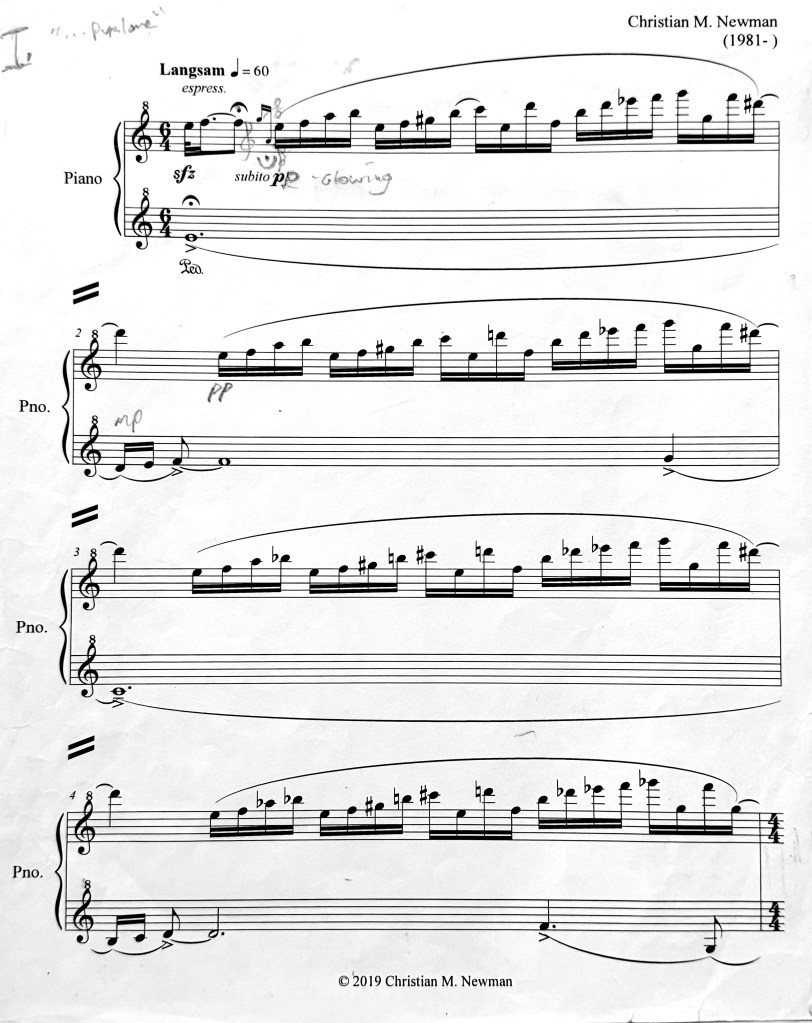
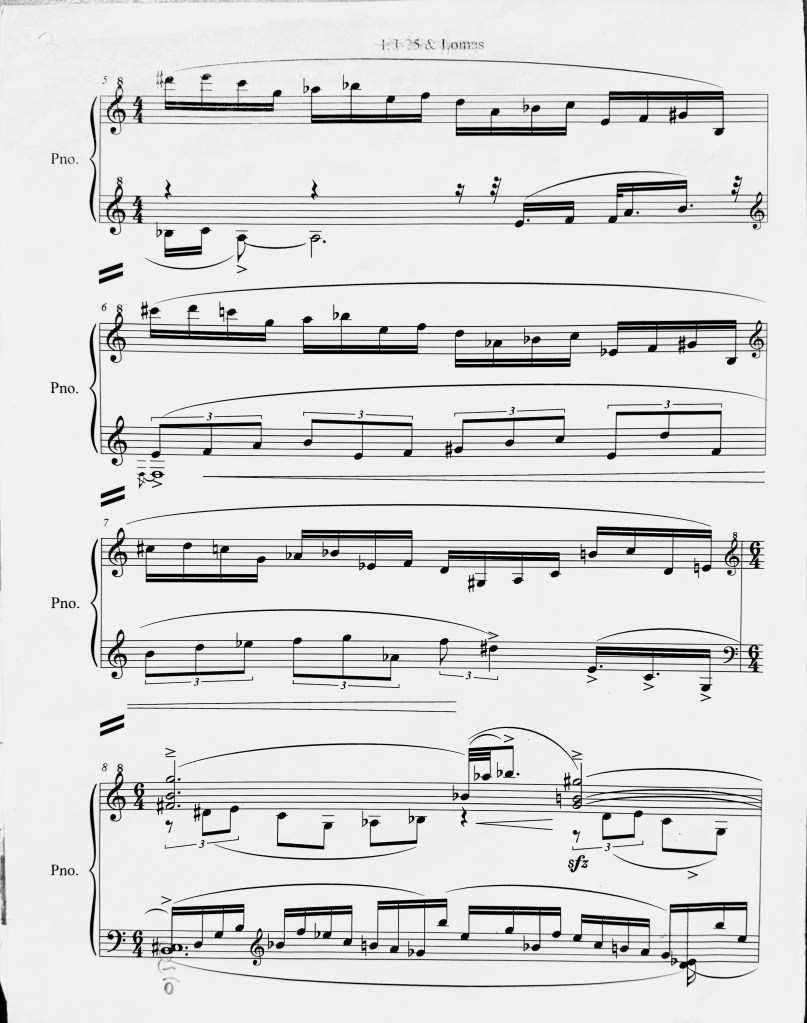
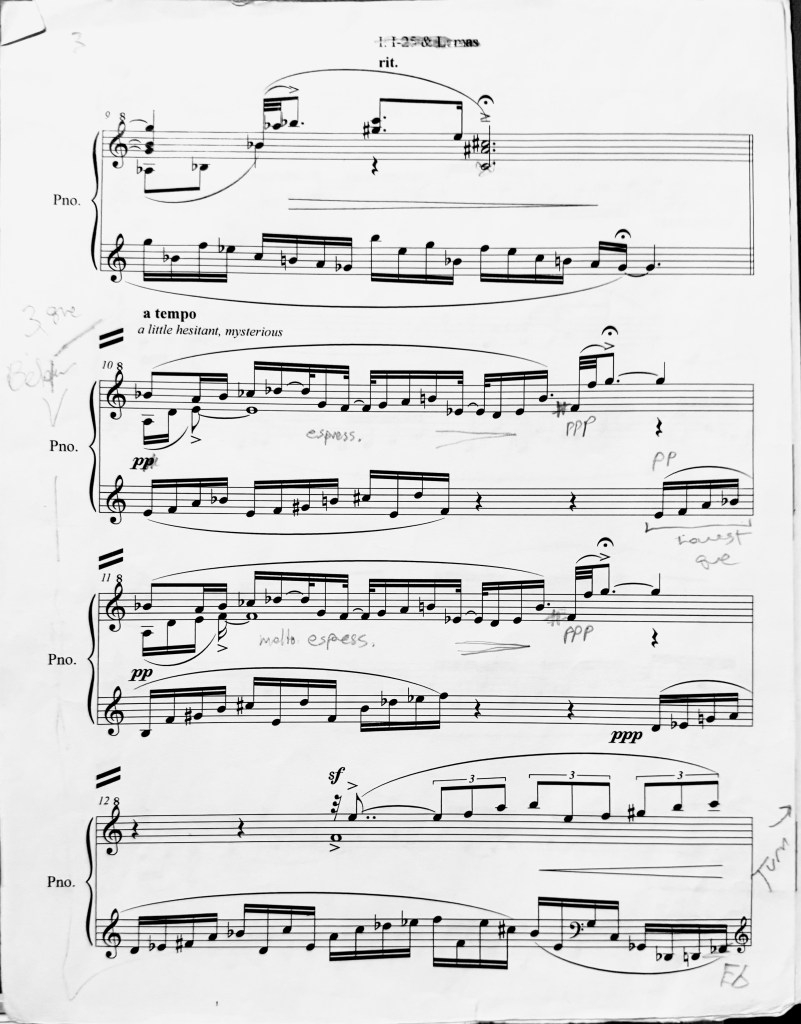
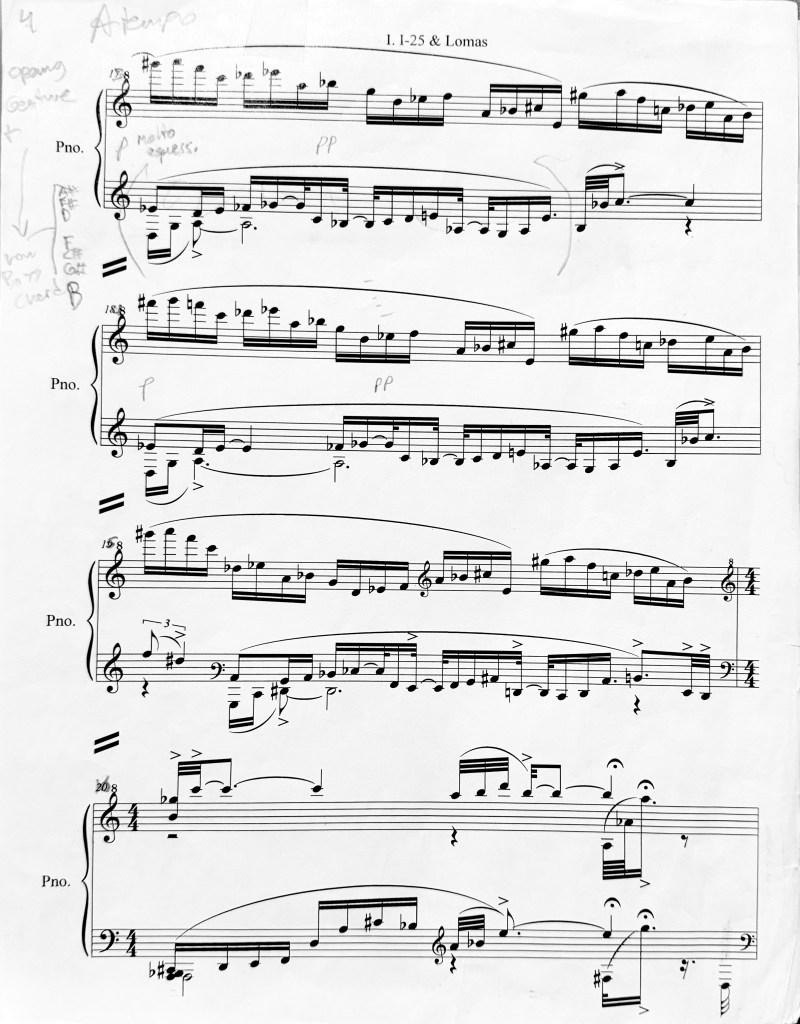
1. Prélude– “Un kaléidoscope de polyommatinae dans le pourpier” (“A kaleidoscope of polyommatinae in the purslane”)
Nos I – IV (WORLD PREMIERE Sept 8 2024)
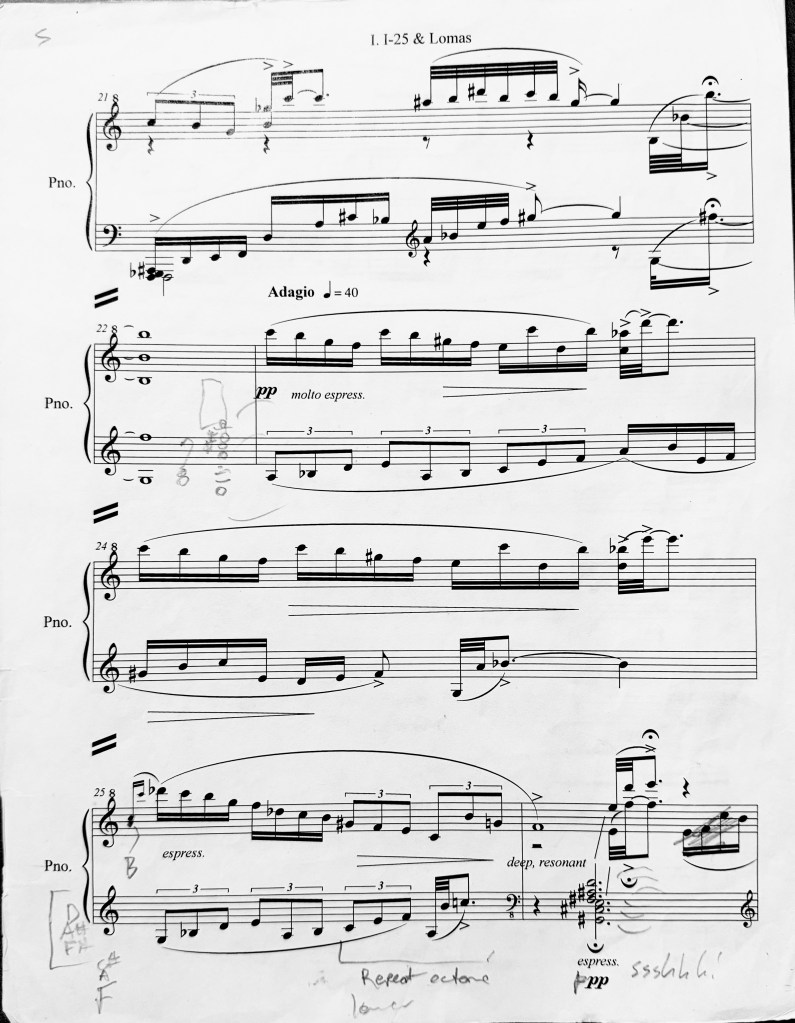
2. Fantasia- “Un chat traque les plus gros papillons dans les parterres de fleurs de souci” (“A cat stalks the larger butterflies in the marigold flower beds”)
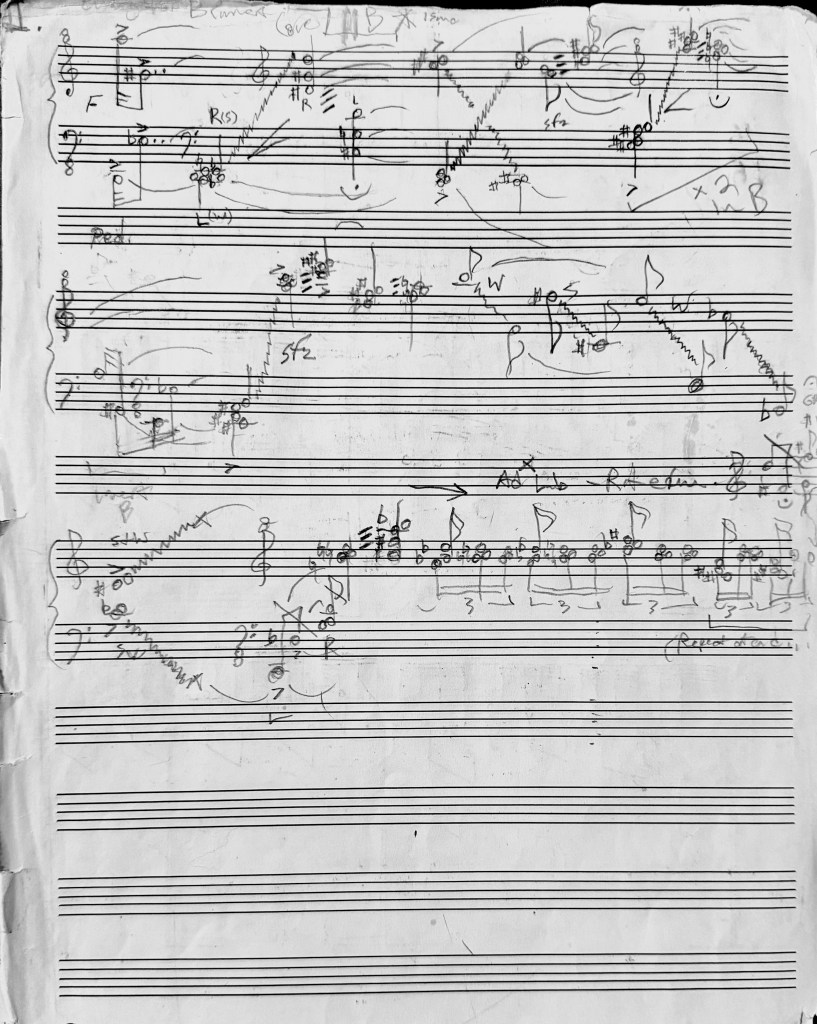
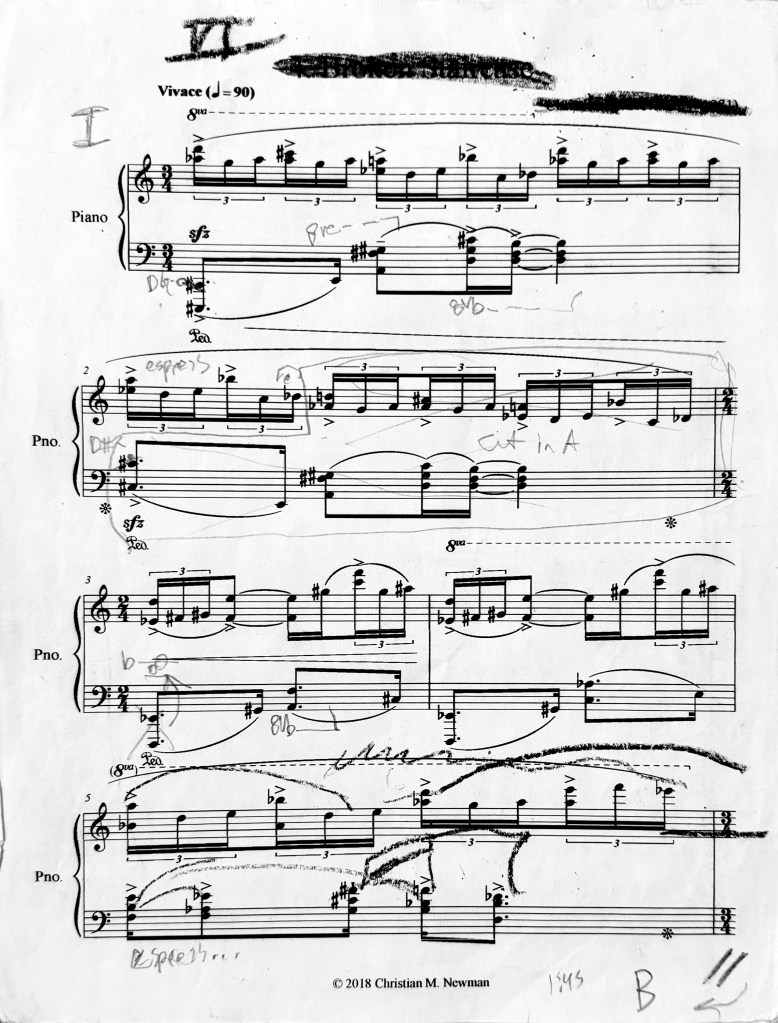
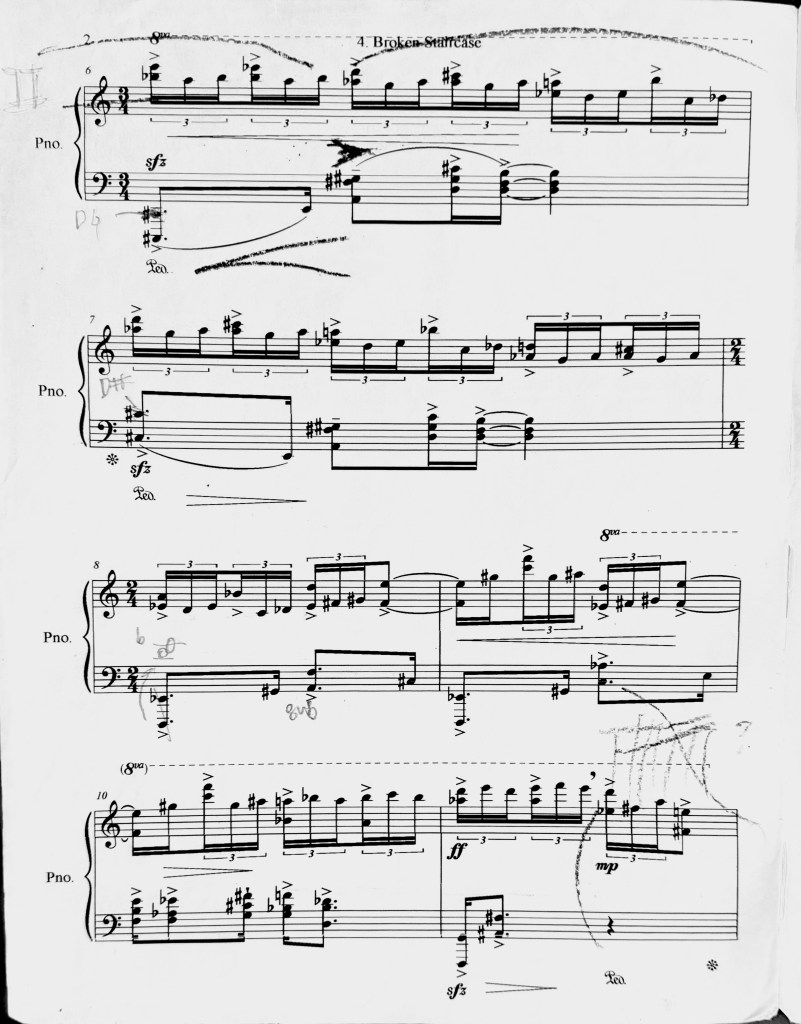
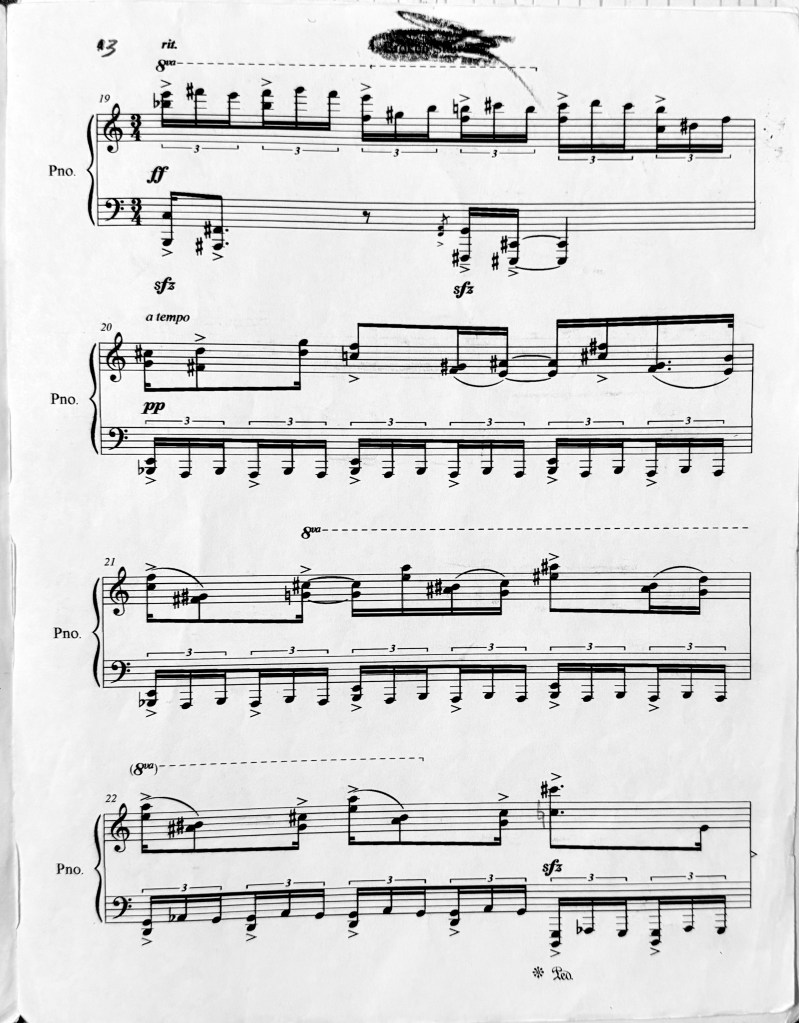
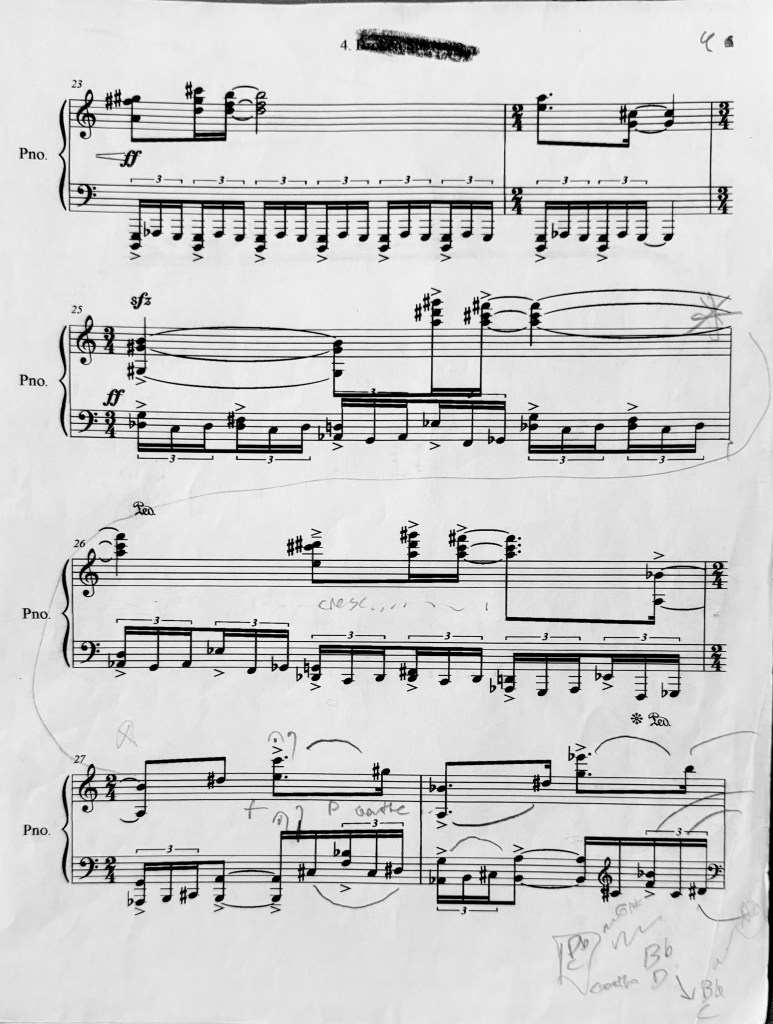
3. Tombeau- “Le défunt Arctic Blue consommé par les fourmis sur Coal Ave. Pont” (“The deceased Arctic Blue consumed by ants on the Coal Ave. bridge”)
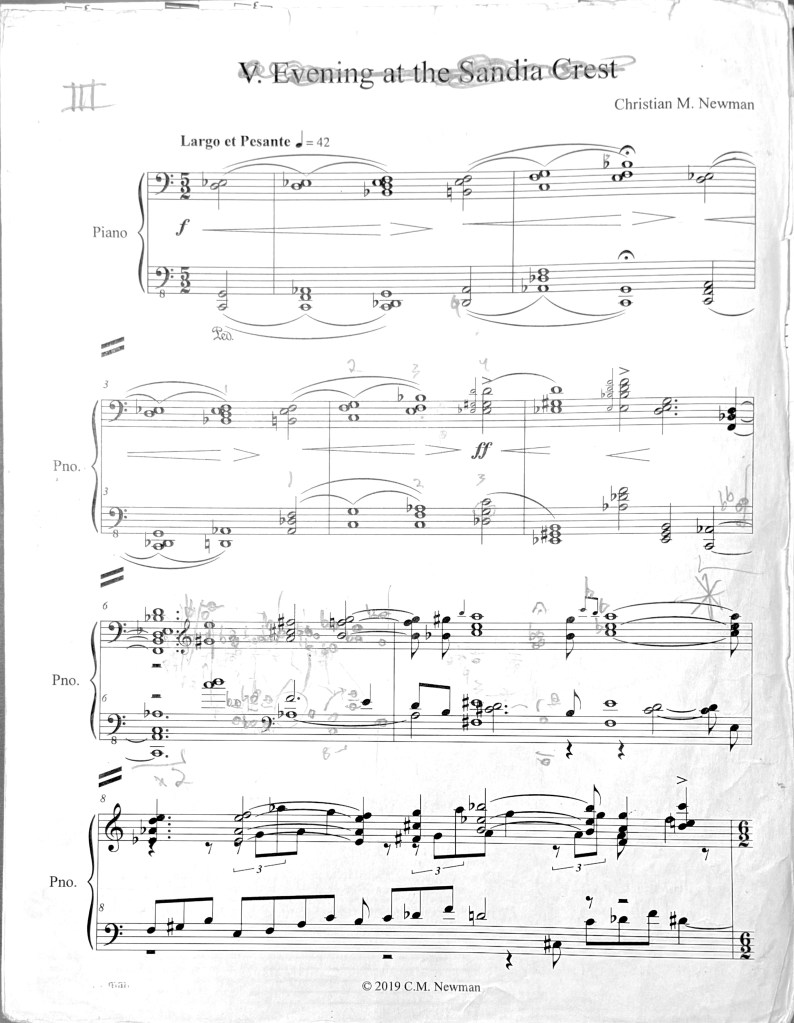
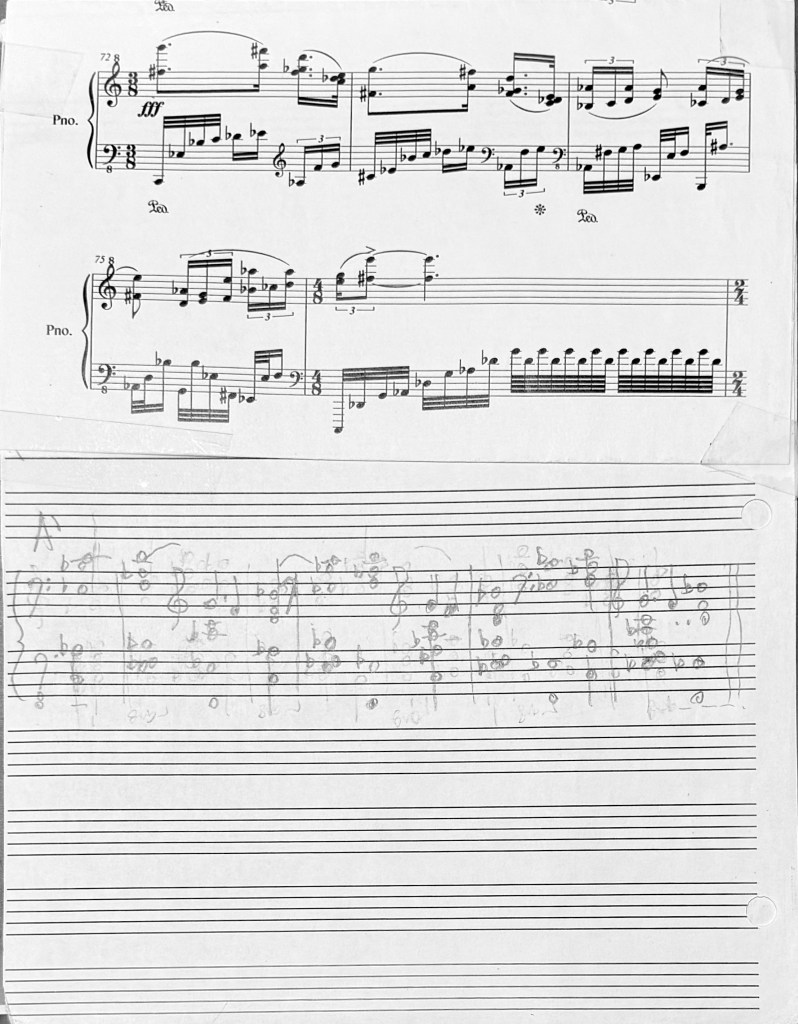
4. Rondo– “Les Polyommatinae s’abritent dans les plants de guimauve contre la crue soudaine qui approche” (“Polyommatinae shelter in the marshmallow plants from the approaching flash flood”)
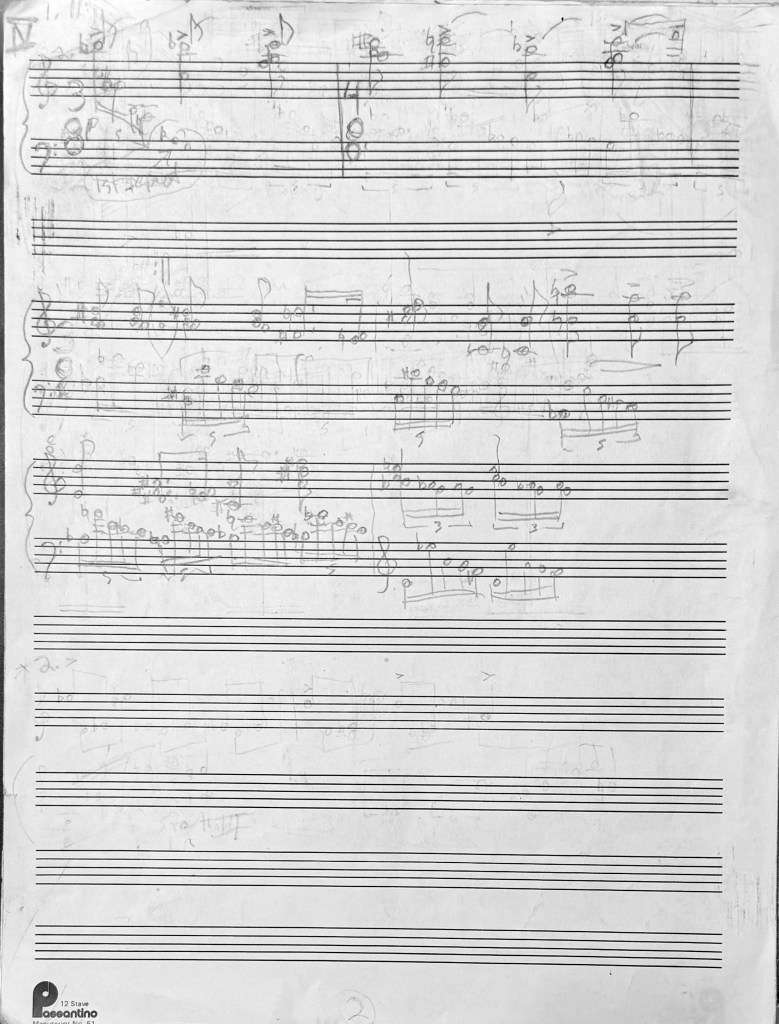
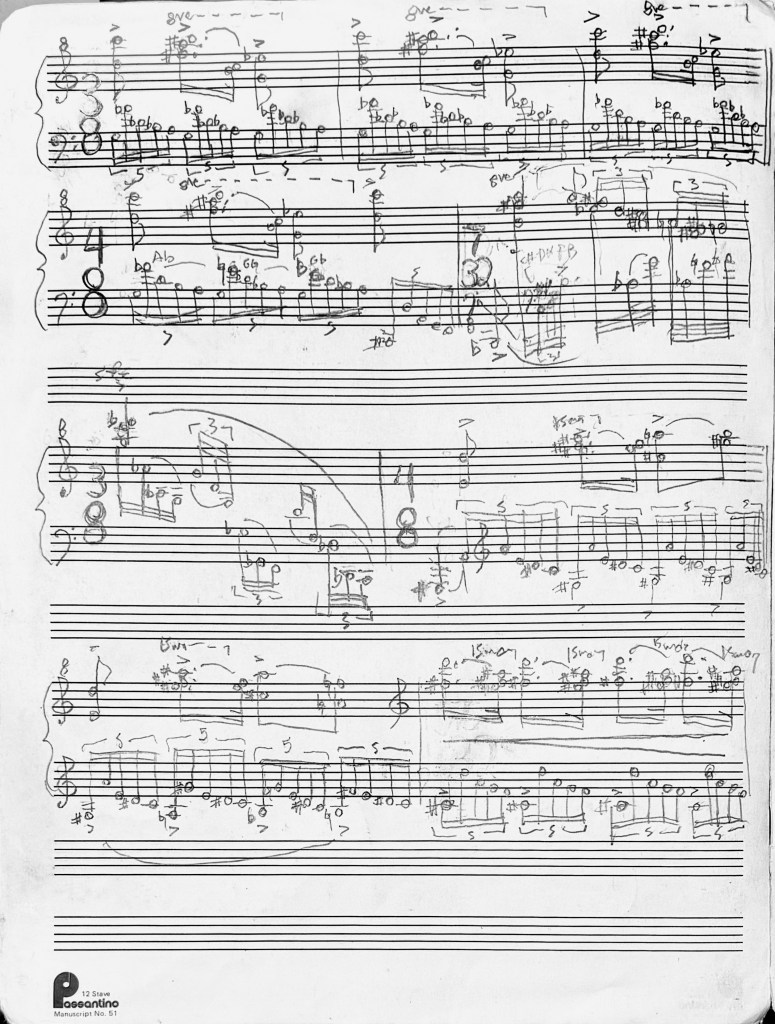
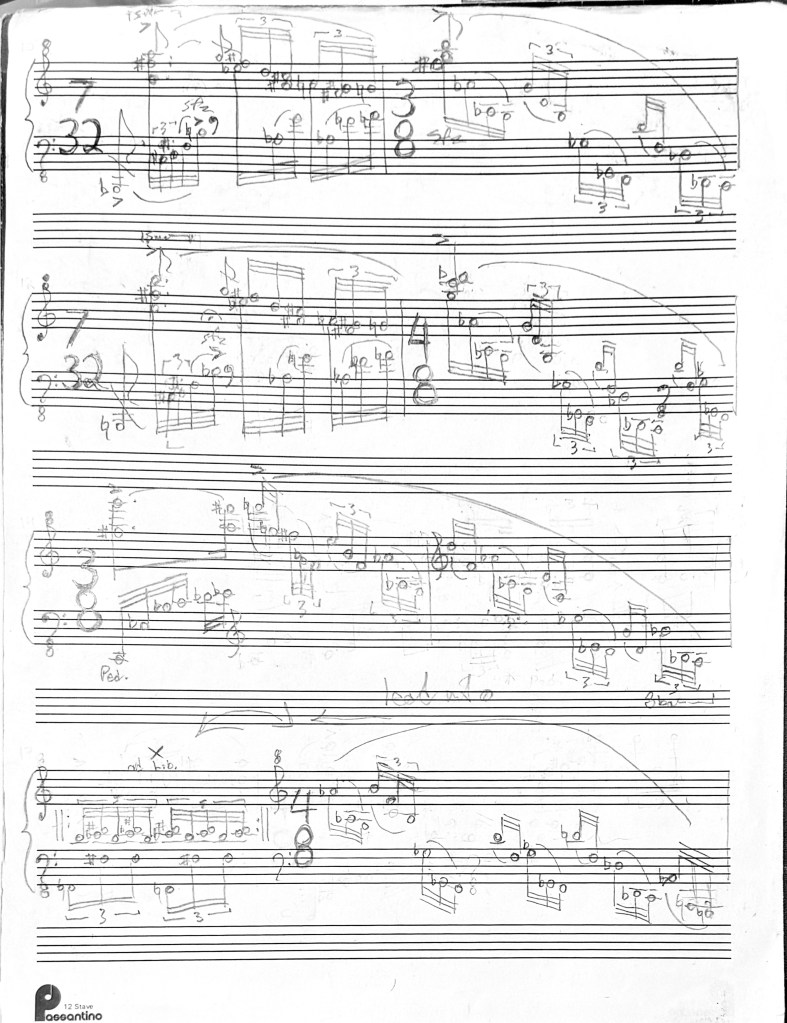
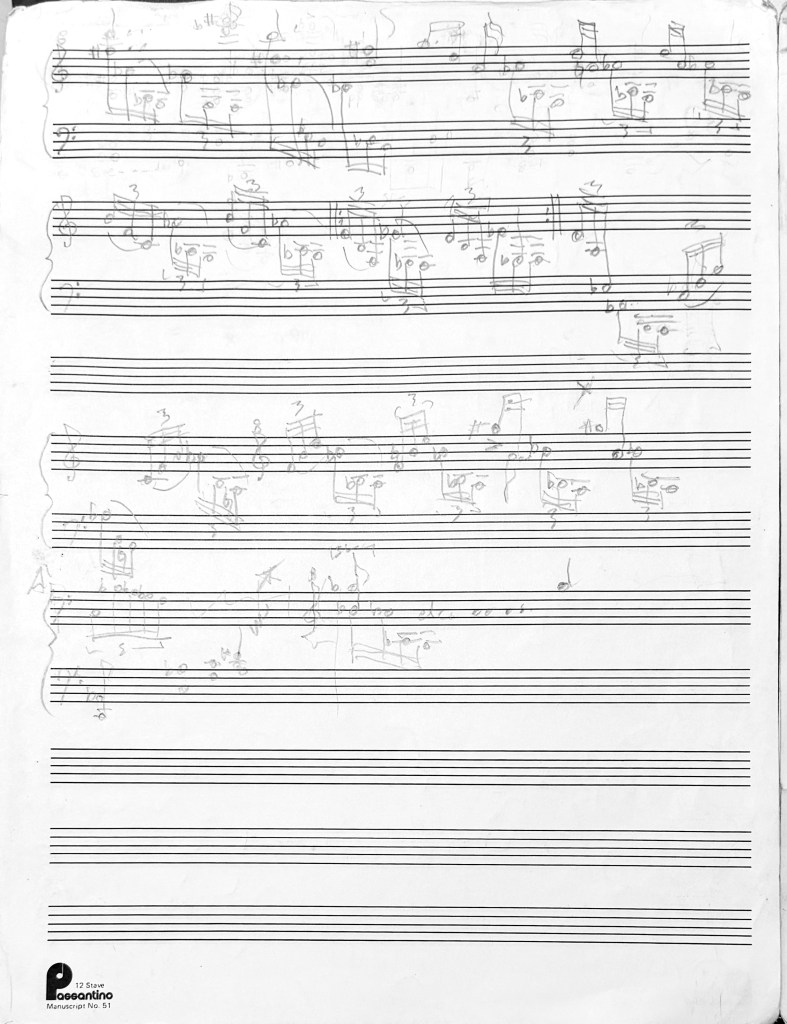
5. Cadenza- “Le jardinier détruit le champ de plantes de guimauve” (“The gardener destroys the marshmallow plant patch”)
Nos II and V, October 27, 2024
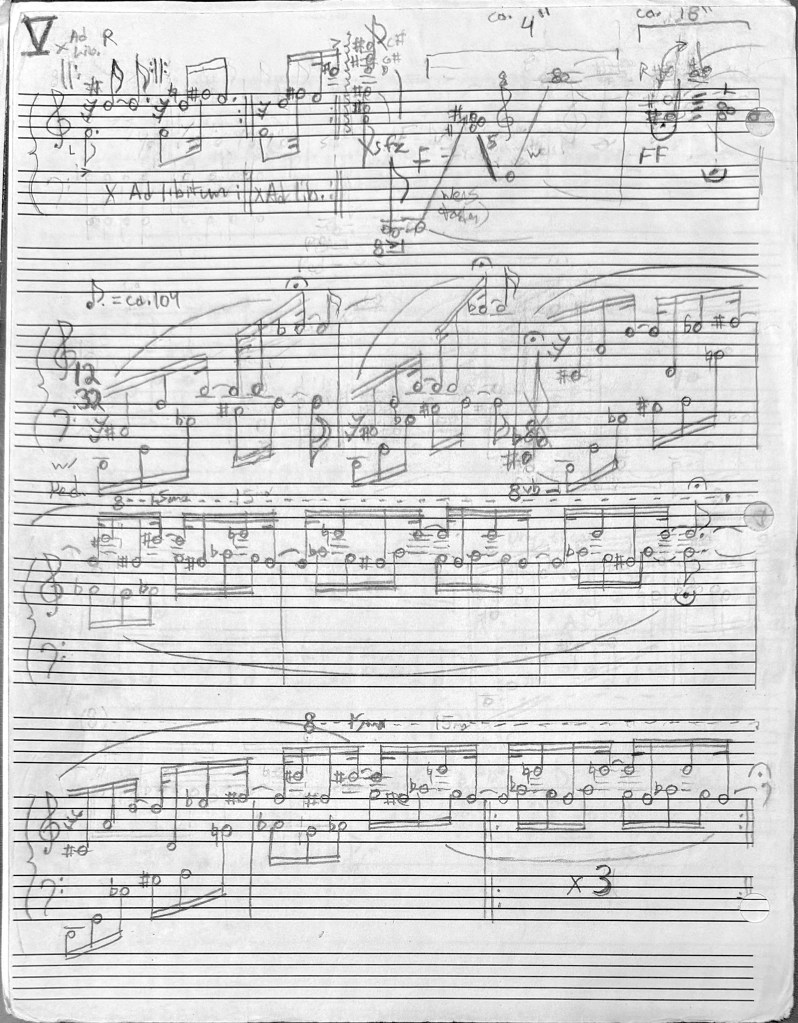
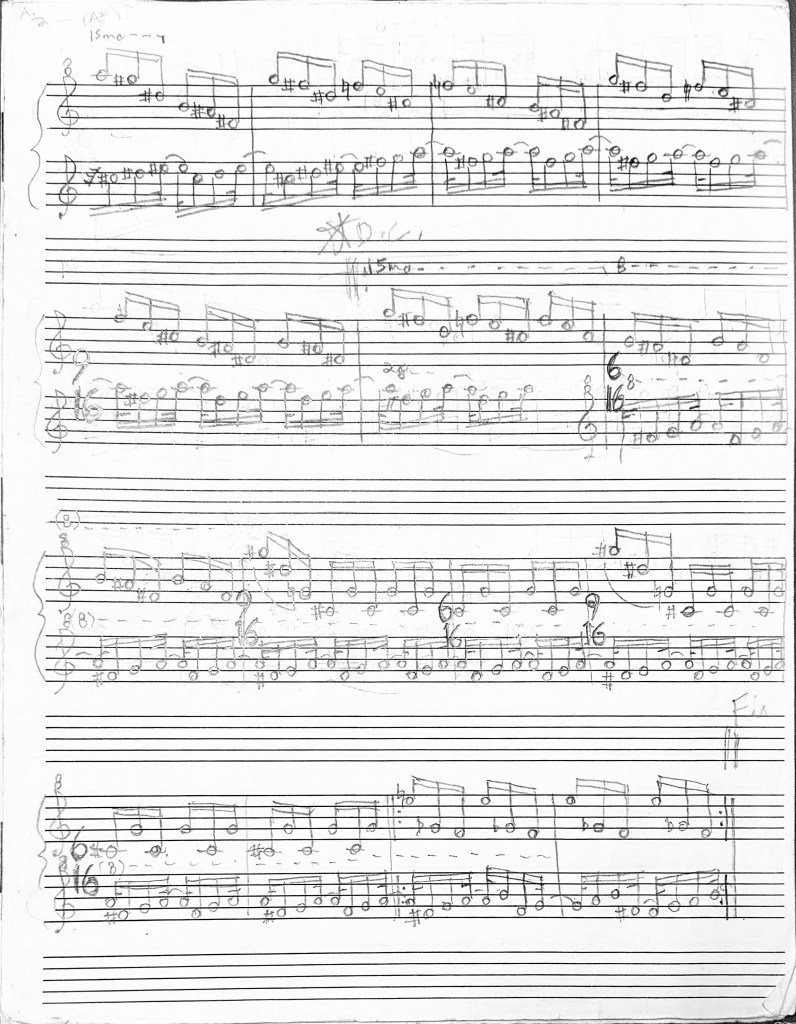
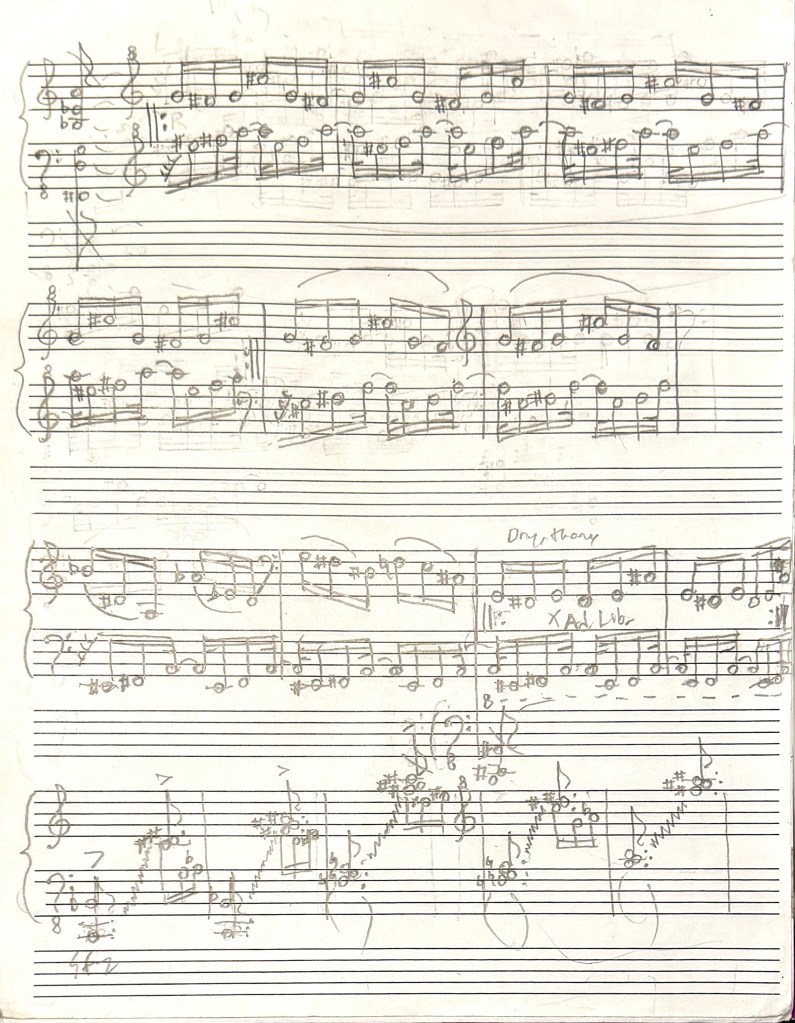
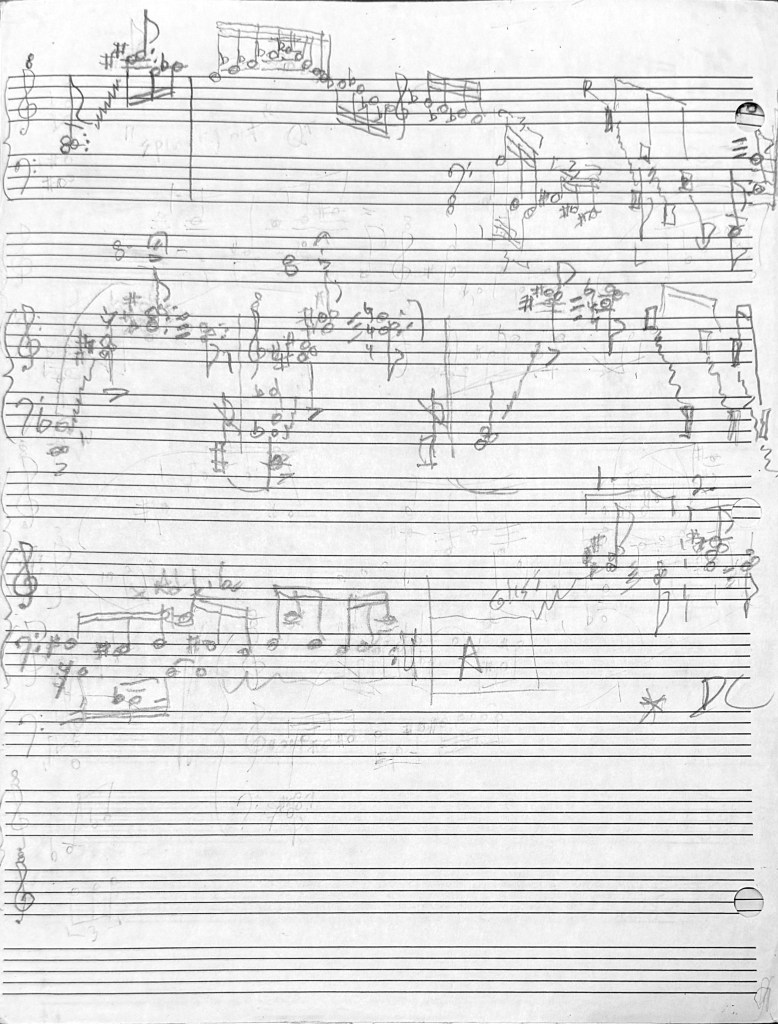
Program Notes
In the manner of the French Impressionists- These works depict moments in the life of the Arctic Blue, a dime-sized species of gossamer-winged butterfly, which thrives in dense swarms, or kaleidoscopes, around low-lying plants in the harsh Albuquerque sun. Around the viny purslane, the long-armed white sage, or the frantic marshmallow plant, one can see them glittering like vibrating jewels in the brightest summer heat, strangely unfazed by, and even reveling in the blasting rays.
Like impressionist compositions from the previous century, these works are meant to depict the mood, and atmosphere evoked by the subject in a specific moment with less emphasis on a strict, evolving musical progression. This is hard for a long-winded person like me, and a fun exploration, to dwell on the subject with less drive to a progression, cadence or conclusion. While some devices and compositional tendencies are borrowed from arrangements by Debussy, et al. these works proceed through a broad harmonic language which avoids some of the musical ‘tropes’ of whole-tone scales, or inverted diatonic chords from the late 19th Century repertoire. These pieces are effectively ‘new wine in old bottles’ as they differ radically from the harmonic, and melodic approaches of those composers, yet utilize a similar sectional style as that given by the impressionists, along with aspects of the piano timbre, and modernist, extended instrumental playing techniques.
These works are built on small snippets, and much of the musical interest may lie in these details of combined notes and resonant qualities. Much like when one views the Arctic Blues in flight, the beauty of that instance seems to encapsulate the beauty and structure that comprises the whole of their brief existence. The proportions and behavior of the details reflects that of the complete structure.
 Christian M. Newman